1. Introduction
The heart receives oxygen and nutrients through a network of blood vessels called coronary arteries. When these arteries become narrowed or blocked due to plaque buildup, the heart may not receive enough blood, leading to conditions such as angina (chest pain), heart attack, and coronary artery disease.
Coronary angiography, also known as a coronary angiogram, is an advanced diagnostic procedure used to examine the coronary arteries and identify blockages or narrowing.
It is considered the gold standard test for diagnosing coronary artery disease and helps doctors decide the most appropriate treatment, including medicines, angioplasty, or bypass surgery.
2. What Is Coronary Angiography?
Coronary Angiography Definition
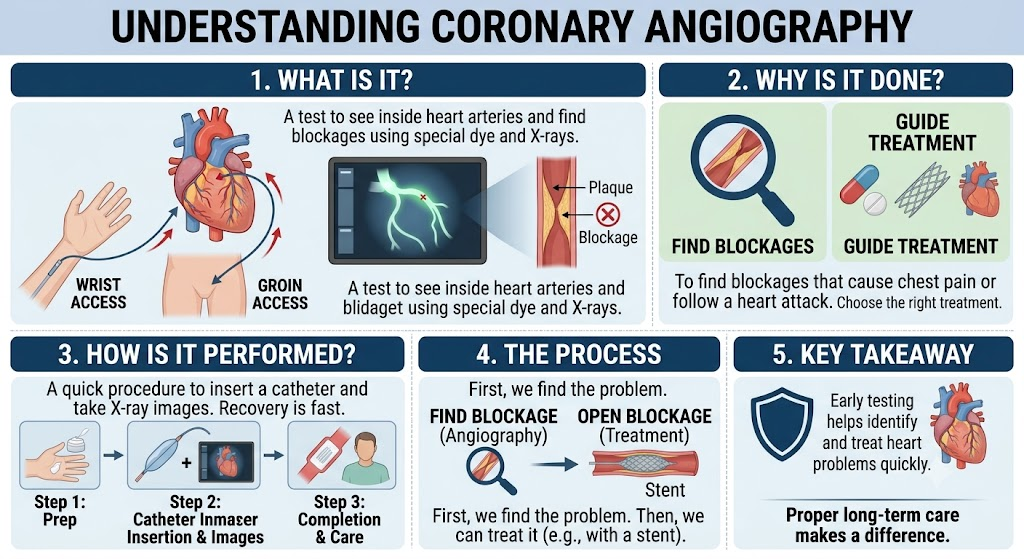
Coronary angiography is an invasive imaging procedure that uses X-rays and a special contrast dye to create detailed pictures of the coronary arteries.
During the procedure, a thin flexible tube called a catheter is inserted into a blood vessel, usually through the wrist or groin, and guided toward the heart. Contrast dye is then injected into the coronary arteries, allowing doctors to see areas of narrowing or blockage.
Information Provided by Coronary Angiography
- Location of artery blockages
- Severity of narrowing
- Number of affected arteries
- Blood flow through coronary vessels
3. Why Is Coronary Angiography Done?
Doctors may recommend coronary angiography for several reasons.
3.1 Diagnosis of Coronary Artery Disease
The most common reason for coronary angiography is to detect blockages caused by plaque buildup inside coronary arteries.
It helps diagnose:
- Coronary artery narrowing
- Multiple vessel disease
- Severe artery blockages
3.2 Evaluation of Chest Pain
Coronary angiography may be performed when chest pain is suspected to be caused by reduced blood flow to the heart.
It may be recommended for patients with:
- Persistent chest discomfort
- Abnormal stress test results
- Symptoms suggesting angina
3.3 Assessment After a Heart Attack
During or after a heart attack, coronary angiography helps identify the blocked artery responsible for reduced blood supply.
It can guide emergency treatment such as:
- Angioplasty
- Stent placement
3.4 Planning Heart Procedures
The results help doctors decide whether a patient requires:
- Medication management
- Coronary angioplasty
- Coronary artery bypass surgery (CABG)
3.5 Evaluation Before Certain Heart Surgeries
Coronary angiography may be performed before some heart valve surgeries or major cardiac procedures to assess coronary artery health.
4. Who May Need Coronary Angiography?
A doctor may recommend coronary angiography for people with:
- Suspected coronary artery disease
- Severe chest pain
- Previous heart attack
- Abnormal ECG or stress test results
- Reduced heart function
- High risk of cardiovascular disease
Risk Factors Include
- Diabetes
- High blood pressure
- High cholesterol
- Smoking
- Obesity
- Family history of heart disease
5. How Is Coronary Angiography Performed?
5.1 Before the Procedure
Before coronary angiography, the healthcare team may perform:
- Blood tests
- ECG
- Kidney function assessment
- Medical history review
Patient Preparation
Patients may be advised to:
- Avoid eating for a few hours before the procedure
- Inform doctors about allergies, especially contrast dye allergy
- Discuss current medications
5.2 During the Procedure
Step 1: Preparation
The patient lies on an examination table. The access site, usually the wrist or groin, is cleaned and numbed with local anaesthesia.
Step 2: Catheter Insertion
A thin catheter is inserted into the blood vessel and guided toward the heart using X-ray guidance.
Step 3: Contrast Injection
A contrast dye is injected into the coronary arteries. The dye makes the arteries visible on X-ray images.
Step 4: Image Recording
The cardiologist captures images showing:
- Artery structure
- Blockages
- Blood flow
5.3 After the Procedure
After completion:
- The catheter is removed.
- Pressure is applied to prevent bleeding.
- The patient is monitored for a few hours.
Many patients can return home the same day, depending on their condition and findings.
6. What Does Coronary Angiography Show?
6.1 Coronary Artery Blockages
It shows:
- Location of narrowing
- Percentage of blockage
- Number of affected arteries
6.2 Severity of Coronary Disease
Doctors can determine whether disease is:
- Mild
- Moderate
- Severe
6.3 Blood Vessel Abnormalities
It can detect unusual structures or problems affecting coronary circulation.
7. Understanding Coronary Angiography Results
The angiography report describes the condition of each major coronary artery.
Doctors assess:
7.1 Normal Coronary Arteries
No significant narrowing or blockage is present.
7.2 Mild Blockage
Small amounts of narrowing may be managed with lifestyle changes and medicines.
7.3 Significant Blockage
Severe narrowing may require procedures such as:
- Angioplasty and stenting
- Bypass surgery
8. Treatment Options After Coronary Angiography
Treatment depends on the severity and location of blockages.
8.1 Lifestyle Changes
Recommended measures include:
- Heart-healthy diet
- Regular physical activity
- Weight management
- Smoking cessation
- Blood pressure and cholesterol control
8.2 Medicines
Doctors may prescribe:
- Blood thinners
- Cholesterol-lowering medicines
- Blood pressure medicines
- Anti-anginal medicines
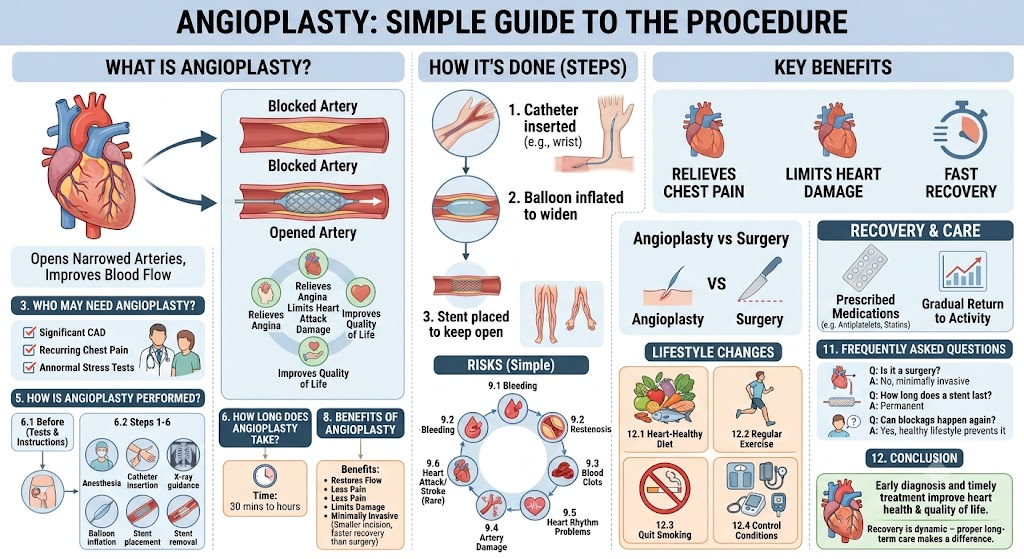
8.3 Coronary Angioplasty and Stenting
If an artery is significantly narrowed, angioplasty may be performed.
During angioplasty:
- A balloon is used to open the narrowed artery.
- A stent may be placed to keep the artery open.
8.4 Coronary Artery Bypass Surgery (CABG)
For severe or multiple blockages, bypass surgery may be recommended to create new pathways for blood flow.
9. Benefits of Coronary Angiography
Coronary angiography provides several important benefits:
- Accurate detection of coronary blockages
- Helps guide treatment decisions
- Allows immediate planning for angioplasty if required
- Provides detailed information about heart artery health
10. Risks and Possible Complications
Coronary angiography is generally safe when performed by experienced medical teams.
Possible risks include:
10.1 Bleeding or Bruising
The catheter insertion site may develop minor bleeding or bruising.
10.2 Contrast Dye Reaction
Some patients may experience allergic reactions to the contrast material.
10.3 Kidney Effects
Contrast dye may require caution in patients with kidney problems.
10.4 Blood Vessel Injury
Rarely, the catheter may cause injury to the blood vessel.
10.5 Heart Rhythm Changes
Temporary rhythm changes may occur during the procedure.
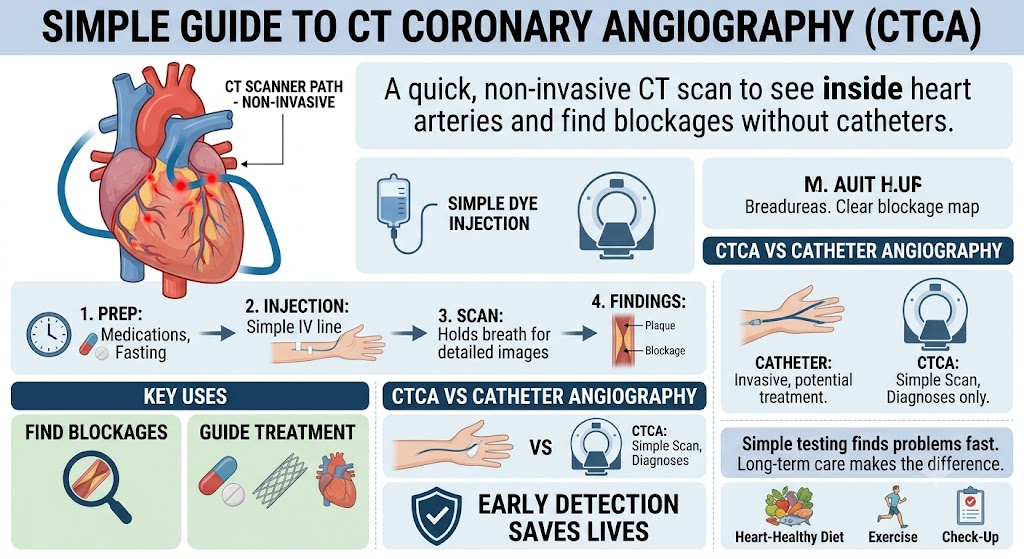
11. Difference Between CT Coronary Angiography and Coronary Angiography
CT Coronary AngiographyCoronary AngiographyNon-invasive imaging test | Invasive catheter-based procedure
Uses CT scanner | Uses catheter and X-ray imaging
Mainly diagnostic | Diagnosis and treatment planning
No artery catheterisation | Catheter inserted into blood vessel
12. Difference Between Coronary Angiography and Angioplasty
Coronary angiography is a diagnostic test used to identify blockages.
Angioplasty is a treatment procedure used to open blocked arteries, often performed after angiography if significant narrowing is found.
13. How to Prepare for Coronary Angiography
Before the procedure:
- Follow fasting instructions
- Inform doctors about allergies
- Discuss medications
- Provide information about kidney problems
- Arrange transportation if required
14. Frequently Asked Questions About Coronary Angiography
14.1 Is Coronary Angiography Painful?
The procedure is usually not painful. Local anaesthesia is used at the catheter insertion site. Some patients may feel mild pressure or warmth when contrast dye is injected.
14.2 How Long Does Coronary Angiography Take?
The procedure usually takes around 30 minutes to an hour, depending on the complexity.
14.3 Can Blockages Be Treated During Coronary Angiography?
If significant blockage is found, doctors may perform angioplasty and stenting during the same session in suitable cases.
14.4 Is Coronary Angiography Safe?
Yes. It is a commonly performed procedure with a good safety record when performed by trained cardiac specialists.
14.5 How Long Does Recovery Take After Angiography?
Recovery depends on the access site and overall health. Many patients return to normal activities within a few days after uncomplicated procedures.
15. Conclusion
Coronary angiography is an important diagnostic procedure that provides detailed information about the health of the heart’s arteries. It helps identify blockages, assess the severity of coronary artery disease, and guide effective treatment decisions.
Early diagnosis of coronary artery problems can prevent serious complications such as heart attacks and improve long-term heart health.
Maintaining a healthy lifestyle, controlling risk factors, and seeking medical evaluation for symptoms such as chest pain or breathlessness are essential steps toward protecting cardiovascular health.