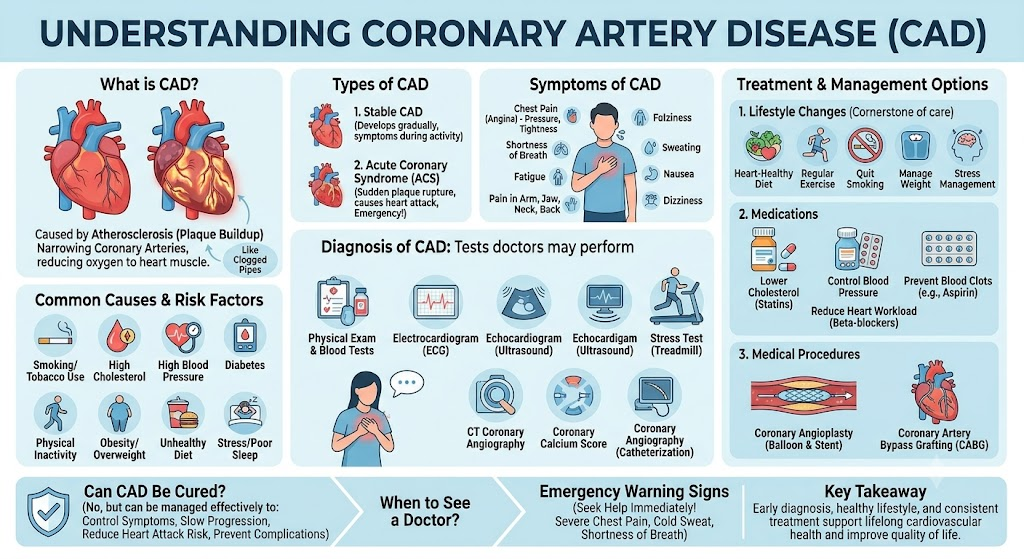
1. Introduction
The heart is one of the most important organs in the body. It works continuously to pump blood and deliver oxygen and nutrients to every tissue and organ. To function properly, the heart itself requires a constant supply of oxygen-rich blood through the coronary arteries.
When these arteries become narrowed or blocked due to fatty deposits called plaque, the condition is known as Coronary Artery Disease (CAD). Reduced blood flow can affect the heart's ability to function efficiently and, in severe cases, may lead to a heart attack.
CAD usually develops gradually over many years, but early detection, healthy lifestyle changes, and appropriate treatment can help prevent serious complications.
2. What Is Coronary Artery Disease (CAD)?
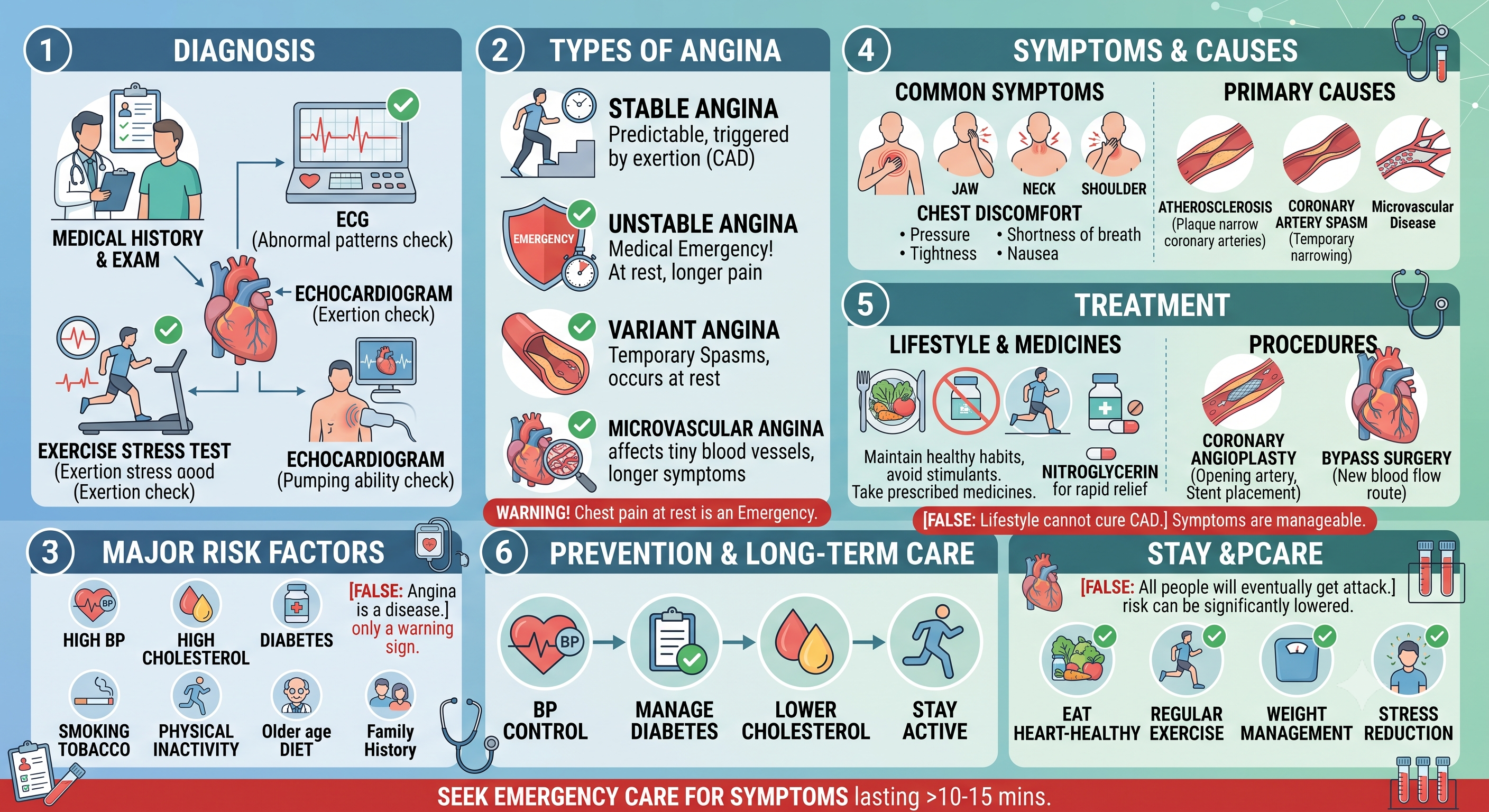
Coronary Artery Disease (CAD) occurs when the coronary arteries, which supply blood to the heart muscle, become narrowed or blocked.
This most commonly happens due to atherosclerosis, a condition in which cholesterol, fat, calcium, and other substances accumulate inside the artery walls to form plaque.
Over time, plaque buildup restricts blood flow, reducing the supply of oxygen to the heart muscle.
In simple terms: Think of the coronary arteries as water pipes. When these pipes become clogged, blood cannot flow freely, making it harder for the heart to function properly.
3. Types of Coronary Artery Disease
3.1 Stable Coronary Artery Disease
Characteristics include:
- Develops gradually over time.
- Symptoms usually occur during physical activity or emotional stress.
- Symptoms often improve with rest or prescribed medication.
3.2 Acute Coronary Syndrome (ACS)
Characteristics include:
- Develops suddenly.
- Usually caused by plaque rupture followed by blood clot formation.
- Can result in a heart attack.
- Requires immediate emergency medical care.
4. Causes of Coronary Artery Disease
The primary cause of CAD is atherosclerosis (plaque buildup) inside the coronary arteries.
Common Contributing Factors Include:
- Smoking or tobacco use
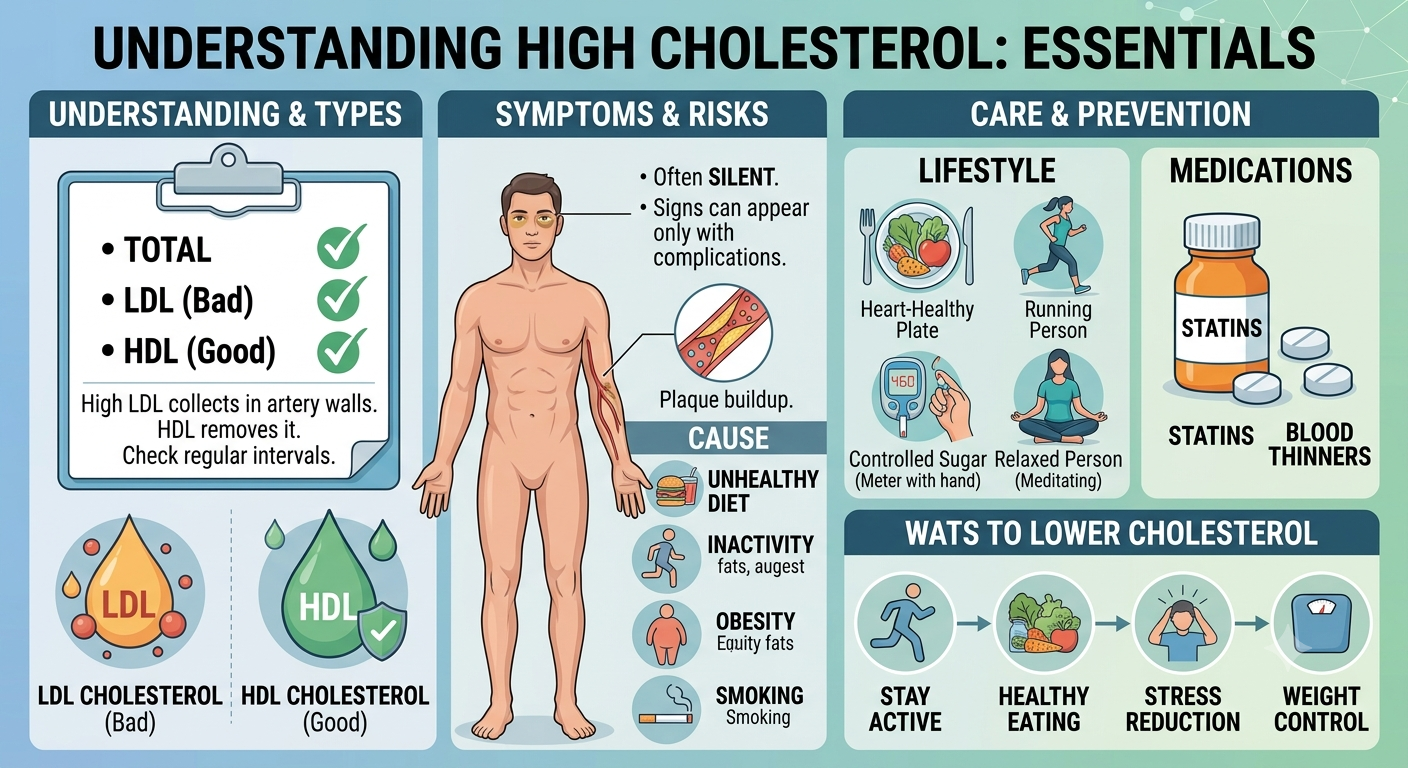
- High cholesterol levels
- High blood pressure (hypertension)
- Diabetes
- Obesity or overweight
- Physical inactivity
- Unhealthy diet rich in saturated fats, sugar, and processed foods
- Excessive alcohol consumption
- Chronic stress
- Poor sleep or obstructive sleep apnoea
- Family history of heart disease
- Increasing age
- Kidney disease or autoimmune disorders
5. Symptoms of Coronary Artery Disease
In many people, CAD develops silently without noticeable symptoms until the disease becomes more advanced.
Common Symptoms Include:
- Chest pain or pressure (angina)
- Shortness of breath
- Fatigue or unusual weakness
- Irregular heartbeat (palpitations)
- Pain spreading to the arm, shoulder, neck, jaw, or back
- Sweating
- Dizziness or lightheadedness
- Nausea
Important: In some cases, the first sign of CAD may be a heart attack.
6. How Coronary Artery Disease Affects the Heart
When blood flow through the coronary arteries is reduced:
- The heart receives less oxygen.
- Chest pain or discomfort (angina) may occur.
- The heart works harder to pump blood.
- Heart muscle may weaken over time.
- The risk of heart attack increases.
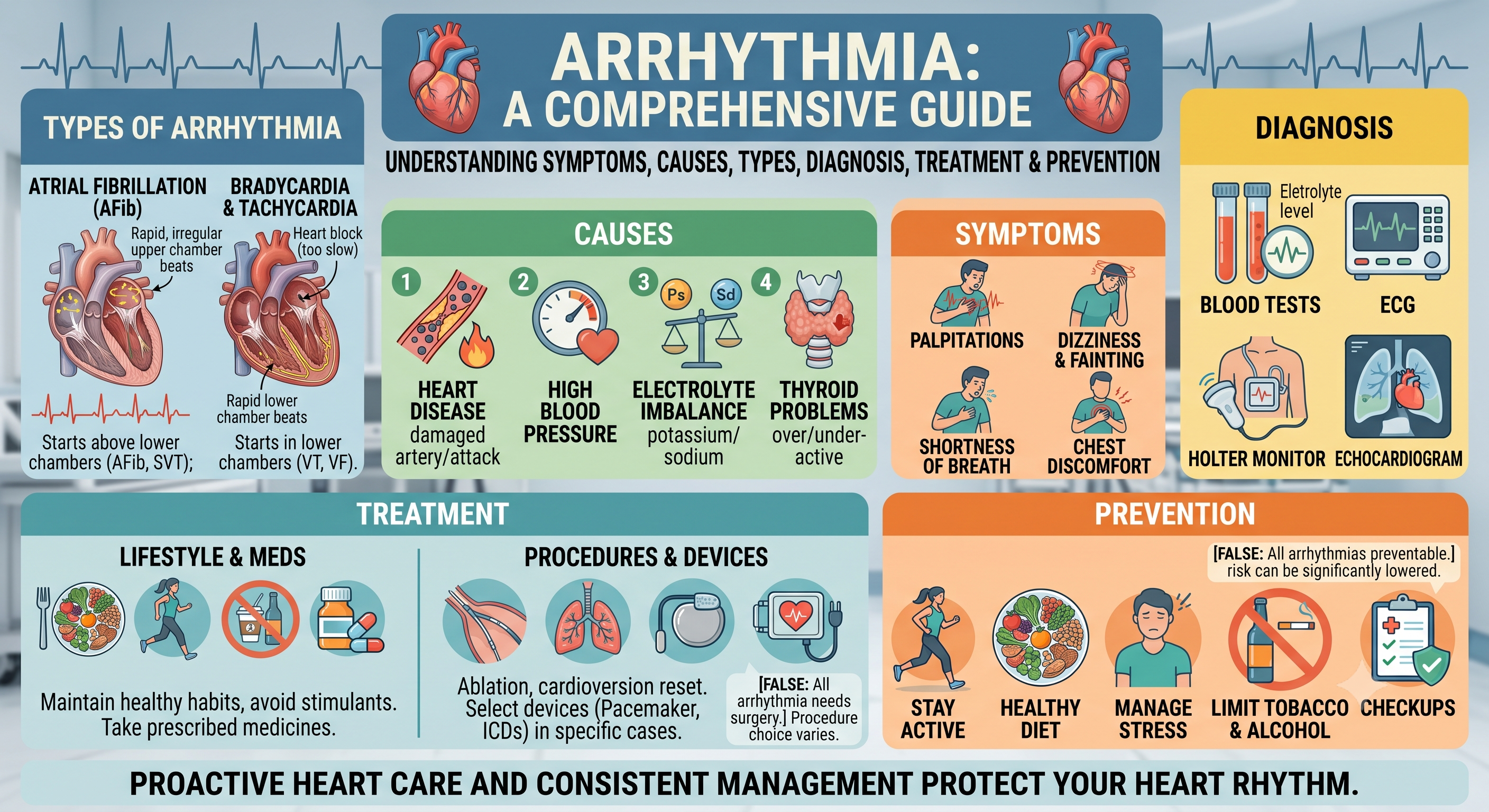
- Abnormal heart rhythms (arrhythmias) may develop.
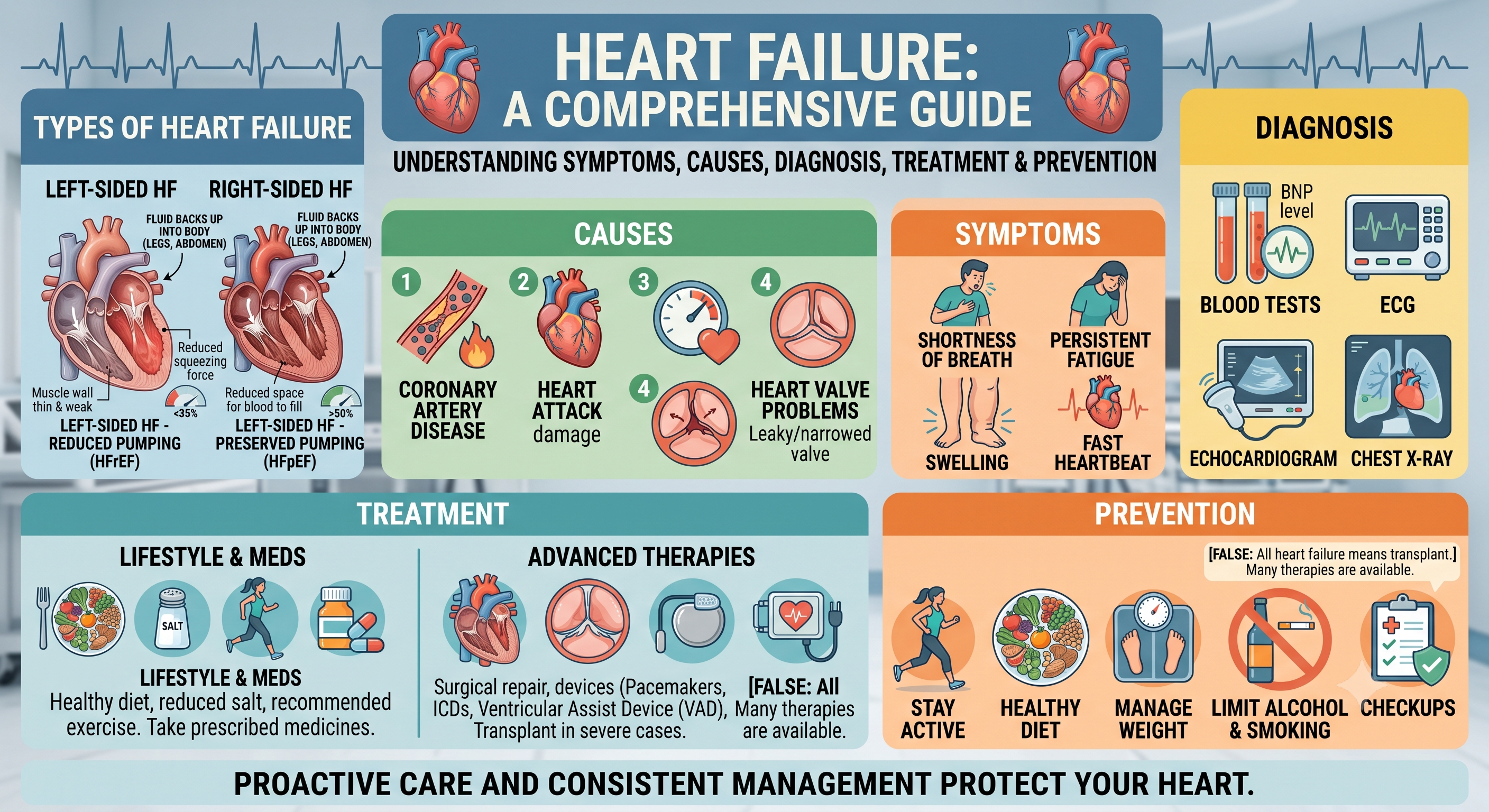
- Severe cases may lead to heart failure or sudden cardiac arrest.
7. How Is Coronary Artery Disease Diagnosed?
Doctors diagnose CAD based on symptoms, medical history, physical examination, and diagnostic tests.
7.1 Physical Examination
Your healthcare provider evaluates:
- Symptoms
- Blood pressure
- Heart sounds
- Overall cardiovascular health
7.2 Blood Tests
Blood tests help assess:
- Cholesterol levels
- Blood sugar levels
- Other cardiovascular risk factors
7.3 Electrocardiogram (ECG/EKG)
An ECG records the electrical activity of the heart and helps detect abnormal heart rhythms or signs of reduced blood flow.
7.4 Echocardiogram
This ultrasound scan evaluates:
- Heart structure
- Heart muscle function
- Heart valve function
7.5 Stress Test (Treadmill Test)
Measures how well the heart performs during physical activity.
7.6 CT Coronary Angiography
Provides detailed images of the coronary arteries to identify narrowing or blockages.
7.7 Coronary Calcium Scoring
Measures calcium deposits inside coronary arteries to estimate the risk of coronary artery disease.
7.8 Coronary Angiography (Cardiac Catheterisation)
A contrast dye is injected into the coronary arteries to accurately identify the location and severity of blockages.
8. Treatment Options for Coronary Artery Disease
Treatment depends on the severity of CAD, symptoms, and overall health.
8.1 Lifestyle Changes
Lifestyle modification is the cornerstone of CAD management.
Recommendations:
- Quit smoking and tobacco use.
- Eat a heart-healthy diet rich in fruits, vegetables, whole grains, nuts, and lean protein.
- Reduce salt, sugar, and processed foods.
- Exercise regularly (at least 30 minutes on most days).
- Maintain a healthy weight.
- Manage stress effectively.
- Get adequate sleep.
- Limit alcohol consumption.
8.2 Medications
Doctors may prescribe medications such as:
- Blood thinners (e.g., aspirin)
- Statins to lower cholesterol
- Beta-blockers
- Calcium channel blockers
- Nitrates for chest pain
- ACE inhibitors or Angiotensin Receptor Blockers (ARBs)
- Medications to control diabetes and blood pressure
These medicines help improve blood flow, reduce the heart's workload, and lower the risk of complications.
8.3 Procedures and Surgery
Coronary Angioplasty (Percutaneous Coronary Intervention – PCI)
A small balloon is used to widen the blocked artery, and a stent is inserted to keep the artery open.
Coronary Artery Bypass Grafting (CABG)
A healthy blood vessel from another part of the body is used to create a new pathway around the blocked artery, restoring blood flow to the heart muscle.
9. Can Coronary Artery Disease Be Prevented or Cured?
Although CAD cannot usually be completely cured, it can be effectively managed.
With appropriate lifestyle changes, medications, and medical care, many people can:
- Control symptoms.
- Slow disease progression.
- Reduce the risk of heart attack.
- Prevent complications.
- Maintain a healthy and active lifestyle.
10. When Should You See a Doctor?
Consult a healthcare professional if you experience:
- Frequent chest discomfort
- Shortness of breath
- Unusual tiredness
- Irregular heartbeat
- Chest pain during physical activity
Early diagnosis and treatment can help prevent serious cardiovascular complications.
11. Emergency Warning Signs
Seek emergency medical care immediately if you experience:
- Severe chest pain lasting more than a few minutes
- Chest pain spreading to the arm, jaw, neck, or back
- Cold sweating
- Difficulty breathing
- Nausea or vomiting accompanied by chest pain
- Sudden dizziness or fainting
These symptoms may indicate a heart attack and require immediate emergency treatment.
12. Conclusion
Coronary Artery Disease (CAD) is one of the leading causes of cardiovascular illness worldwide, but it is also highly manageable when diagnosed early.
Adopting a heart-healthy lifestyle, attending regular health check-ups, managing conditions such as high blood pressure, diabetes, and high cholesterol, and following prescribed treatments can significantly reduce the risk of heart attack and improve quality of life.
Key Takeaway:
Taking care of your heart through healthy lifestyle choices, early diagnosis, and appropriate medical treatment can help prevent serious complications and support lifelong cardiovascular health.
13. Frequently Asked Questions (FAQs)
13.1 What Causes Coronary Artery Disease?
CAD is primarily caused by atherosclerosis, in which cholesterol, fat, calcium, and other substances build up inside the coronary arteries, reducing blood flow to the heart.
13.2 What Are the Early Signs of Coronary Artery Disease?
Common early symptoms include:
- Chest discomfort or angina
- Shortness of breath
- Fatigue
- Irregular heartbeat
- Reduced exercise tolerance
13.3 Can Coronary Artery Disease Be Reversed?
CAD cannot usually be completely reversed, but healthy lifestyle changes, medications, and appropriate medical treatment can slow its progression and effectively control symptoms.
13.4 Is Coronary Artery Disease Dangerous?
Yes. Without treatment, CAD can lead to:
- Heart attack
- Heart failure
- Dangerous heart rhythm abnormalities
- Sudden cardiac arrest
13.5 How Can I Reduce My Risk of Coronary Artery Disease?
You can lower your risk by:
- Eating a heart-healthy diet.
- Exercising regularly.
- Avoiding smoking and tobacco.
- Maintaining a healthy weight.
- Controlling blood pressure, cholesterol, and diabetes.
- Managing stress.
- Attending regular health screenings.