1. Introduction
The heart receives oxygen-rich blood through coronary arteries. When these arteries become narrowed or blocked due to the buildup of fatty deposits called plaque, the heart muscle may not receive enough oxygen. This condition is known as coronary artery disease (CAD) and can lead to chest pain, heart attack, and other serious complications.
Angioplasty, also known as coronary angioplasty or percutaneous coronary intervention (PCI), is a minimally invasive procedure used to open blocked or narrowed arteries and improve blood flow to the heart.
During angioplasty, a small balloon is inflated inside the blocked artery to widen it. In most cases, a small mesh tube called a stent is placed to keep the artery open and maintain blood flow.
2. What Is Angioplasty?
Angioplasty Definition
Angioplasty is a procedure that restores blood circulation through narrowed or blocked blood vessels.
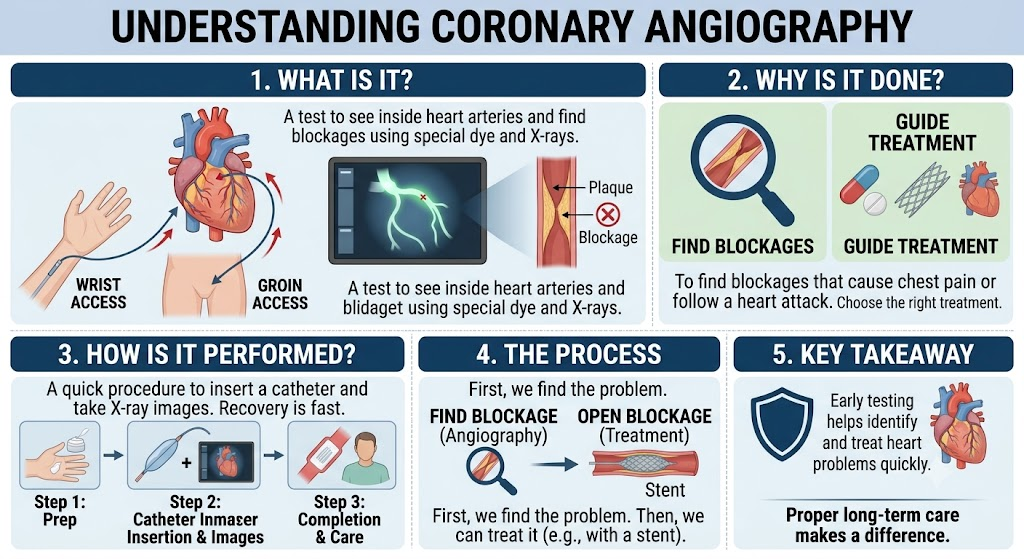
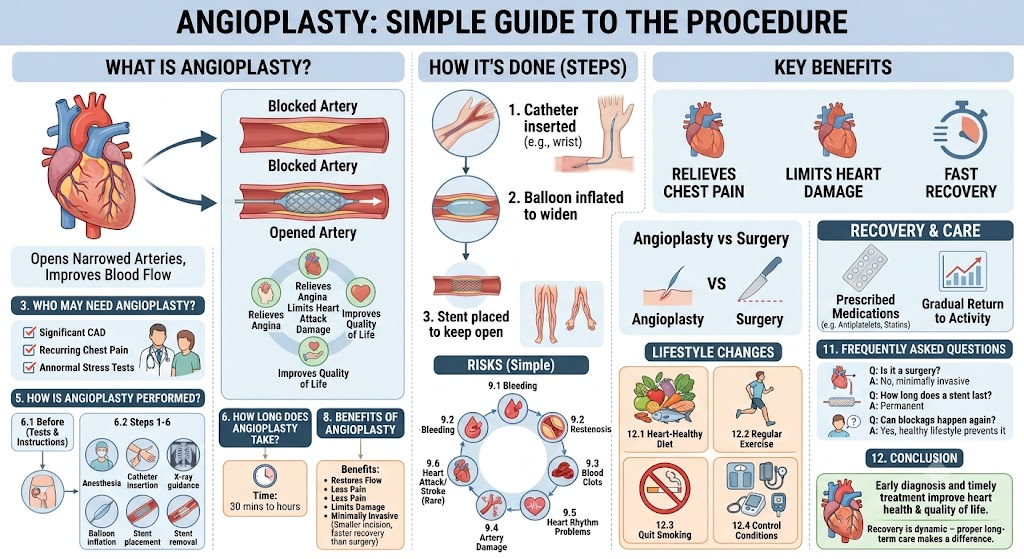
In coronary angioplasty, a thin tube called a catheter is inserted into a blood vessel, usually through the wrist or groin, and guided to the blocked coronary artery.
A small balloon at the tip of the catheter is inflated to compress the plaque against the artery wall, widening the artery. A stent may then be placed to prevent the artery from narrowing again.
Main Goals of Angioplasty
- Improve blood flow to the heart muscle
- Relieve chest pain caused by reduced blood supply
- Reduce heart damage during certain heart attacks
- Improve symptoms and quality of life
3. Why Is Angioplasty Done?
Doctors recommend angioplasty when a coronary artery becomes significantly narrowed or blocked.
3.1 Treatment of Heart Attack
During a heart attack, a blood clot may suddenly block a coronary artery. Emergency angioplasty can quickly restore blood flow and limit damage to the heart muscle.
3.2 Treatment of Angina (Chest Pain)
Patients with severe or persistent chest pain due to reduced blood flow may benefit from angioplasty.
3.3 Improving Blood Flow in Blocked Arteries
Angioplasty can open narrowed arteries caused by plaque buildup and improve circulation.
3.4 Treating Peripheral Artery Disease
Angioplasty may also be performed in arteries outside the heart, such as those supplying the legs, when blockages affect blood flow.
4. Who May Need Angioplasty?
A cardiologist may recommend angioplasty for patients with:
- Significant coronary artery blockage
- Severe or recurring chest pain
- Heart attack caused by blocked arteries
- Abnormal stress test results
- Reduced blood flow to the heart
Factors Considered Before Angioplasty
- Number of blocked arteries
- Location of blockages
- Severity of narrowing
- Overall heart health
- Other medical conditions
5. Types of Angioplasty
5.1 Coronary Angioplasty
This is the most common type and is used to open blocked coronary arteries supplying blood to the heart.
5.2 Balloon Angioplasty
A balloon catheter is used to widen the narrowed artery.
Today, balloon angioplasty is often combined with stent placement.
5.3 Stent Placement
A stent is a small mesh tube placed inside the artery to keep it open.
Types of Stents
5.3.1 Drug-Eluting Stent (DES)
These stents release medication slowly to reduce the chance of the artery narrowing again.
5.3.2 Bare-Metal Stent
These are metal mesh stents without medication coating and are used less frequently today.
5.4 Peripheral Angioplasty
This procedure opens blocked arteries in areas such as:
- Legs
- Arms
- Neck arteries
6. How Is Angioplasty Performed?
6.1 Before the Procedure
Before angioplasty, doctors usually perform tests such as:
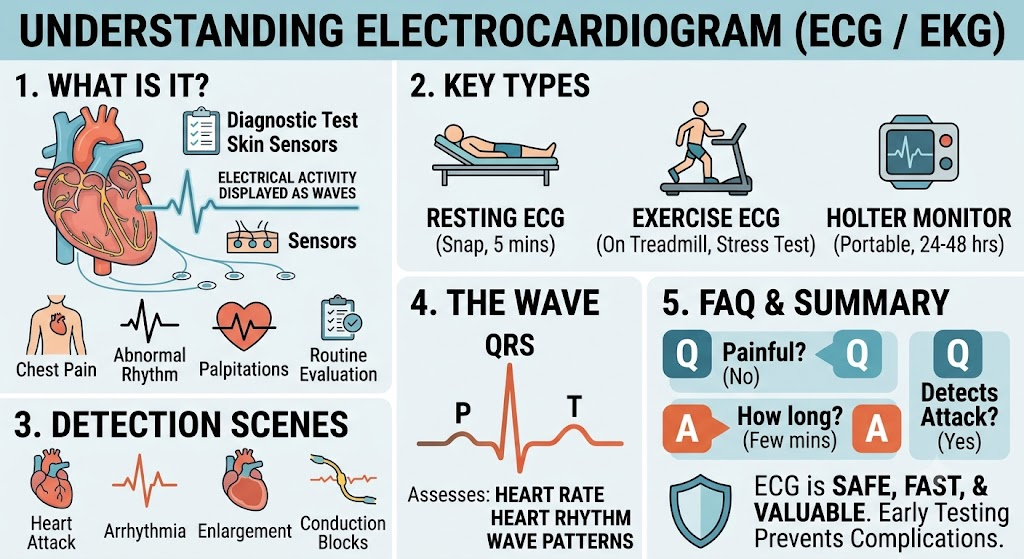
- ECG
- Blood tests
- Echocardiogram
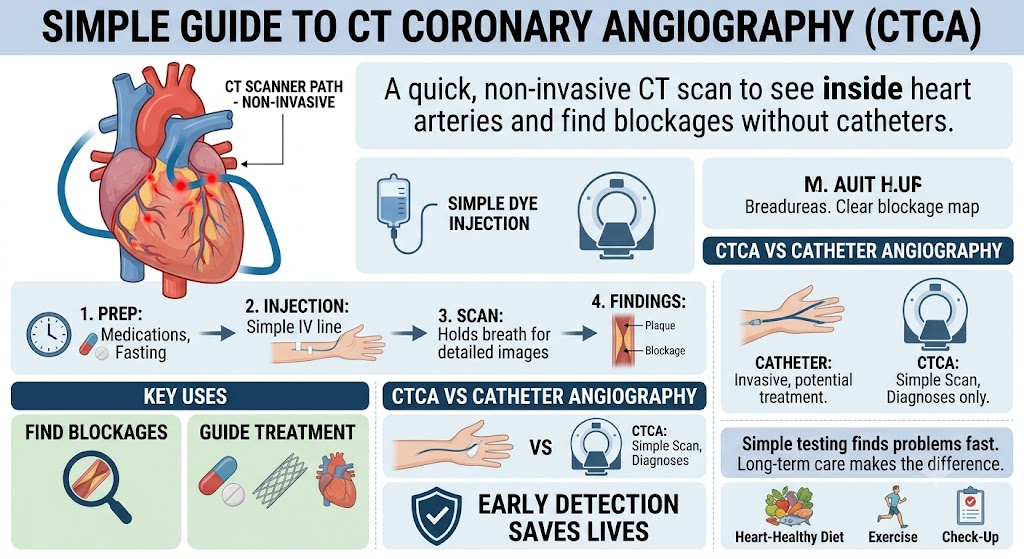
- Coronary angiography
Patient Instructions Before Procedure
- Avoid eating before the procedure
- Inform doctors about allergies
- Discuss current medications
6.2 During the Procedure
Step 1: Local Anaesthesia
The insertion area is cleaned and numbed.
Step 2: Catheter Insertion
A thin catheter is inserted through an artery, commonly through the wrist or groin.
Step 3: Guiding the Catheter
Using X-ray guidance, the catheter is moved toward the blocked artery.
Step 4: Balloon Inflation
A small balloon is inflated at the blockage site, pushing plaque outward and widening the artery.
Step 5: Stent Placement
A stent may be placed to keep the artery open.
Step 6: Completion
The catheter is removed, and the access site is treated to prevent bleeding.
7. How Long Does Angioplasty Take?
The procedure usually takes around 30 minutes to several hours, depending on:
- Number of blockages
- Complexity of the artery disease
- Whether multiple stents are required
Emergency angioplasty during a heart attack may be performed as quickly as possible to restore blood flow.
8. Benefits of Angioplasty
8.1 Restores Blood Flow
It improves circulation through narrowed arteries.
8.2 Reduces Chest Pain
Many patients experience relief from angina symptoms.
8.3 Limits Heart Damage
When performed quickly during a heart attack, angioplasty can reduce damage to the heart muscle.
8.4 Minimally Invasive
Compared with bypass surgery, angioplasty usually involves:
- Smaller incision
- Shorter hospital stay
- Faster recovery
9. Risks and Possible Complications of Angioplasty
9.1 Bleeding
Bleeding or bruising may occur at the catheter insertion site.
9.2 Re-narrowing of the Artery
In some cases, the treated artery may narrow again, a condition called restenosis.
9.3 Blood Clots
Blood clots may form inside the stent, which is why antiplatelet medicines are prescribed after the procedure.
9.4 Artery Damage
Rarely, the artery wall may be injured during the procedure.
9.5 Heart Rhythm Problems
Temporary rhythm changes may occur.
9.6 Heart Attack or Stroke
Rarely, serious complications can occur.
10. Recovery After Angioplasty
Recovery depends on the patient’s health and whether the procedure was planned or emergency treatment.
After Angioplasty
- The patient is monitored for several hours.
- Medicines are prescribed to prevent clot formation.
- Activity restrictions may be advised temporarily.
Most patients can gradually return to normal activities after medical guidance.
11. Medicines After Angioplasty
Patients are commonly prescribed:
- Antiplatelet medicines to prevent stent blockage
- Cholesterol-lowering medicines
- Blood pressure medicines
- Other heart medications if needed
It is important not to stop prescribed medicines without consulting a doctor.
12. Lifestyle Changes After Angioplasty
Angioplasty treats a blockage but does not remove the underlying causes of artery disease. Healthy lifestyle changes are essential.
12.1 Heart-Healthy Diet
Choose:
- Fruits and vegetables
- Whole grains
- Lean proteins
- Healthy fats
Limit:
- Excess salt
- Fried foods
- Saturated and trans fats
12.2 Regular Exercise
Follow an exercise plan recommended by your healthcare provider.
12.3 Quit Smoking
Stopping smoking significantly reduces the risk of future heart problems.
12.4 Control Health Conditions
Maintain healthy levels of:
- Blood pressure
- Blood sugar
- Cholesterol
- Body weight
13. Difference Between Angioplasty and Bypass Surgery
AngioplastyBypass SurgeryMinimally invasive procedure | Major surgical procedure
Uses balloon and stent | Creates a new route around blocked arteries
Usually faster recovery | Longer recovery period
Suitable for selected blockages | Often used for complex multiple blockages
14. Frequently Asked Questions About Angioplasty
14.1 Is Angioplasty a Surgery?
Angioplasty is a minimally invasive procedure, not open-heart surgery. It is performed using a catheter inserted through a blood vessel.
14.2 How Successful Is Angioplasty?
Angioplasty is highly successful in improving blood flow in suitable patients. Long-term outcomes depend on lifestyle, medications, and overall heart health.
14.3 How Long Does a Stent Last?
A stent is designed to remain permanently inside the artery. Regular follow-up and medication adherence are important.
14.4 Can Blockage Happen Again After Angioplasty?
Yes, arteries can narrow again in some cases. Maintaining a healthy lifestyle and taking prescribed medicines reduces this risk.
14.5 Can a Person Live a Normal Life After Angioplasty?
Many people return to normal activities after recovery, especially with proper lifestyle changes and regular medical follow-up.
15. Conclusion
Angioplasty is a life-saving and effective procedure used to restore blood flow through blocked or narrowed arteries. It plays a crucial role in treating coronary artery disease, relieving chest pain, and reducing heart damage during heart attacks.
Successful recovery after angioplasty depends not only on the procedure itself but also on long-term heart care, including healthy eating, regular exercise, medication adherence, and control of cardiovascular risk factors.
Early diagnosis and timely treatment can significantly improve heart health and quality of life.