1. Introduction
The heart works through a coordinated electrical system that controls each heartbeat. Any disturbance in this electrical activity can affect the heart’s rhythm and function.
An Electrocardiogram (ECG or EKG) is a simple, painless, and commonly used test that records the electrical signals produced by the heart. It helps doctors evaluate heart rhythm, detect abnormalities, and diagnose several heart-related conditions.
An ECG is one of the first and most important tests performed when a person experiences symptoms such as chest pain, palpitations, dizziness, or breathlessness.
Understanding what an ECG is, why it is done, how it is performed, and what the results indicate can help patients prepare better for their heart evaluation.
2. What Is an ECG?
ECG Definition
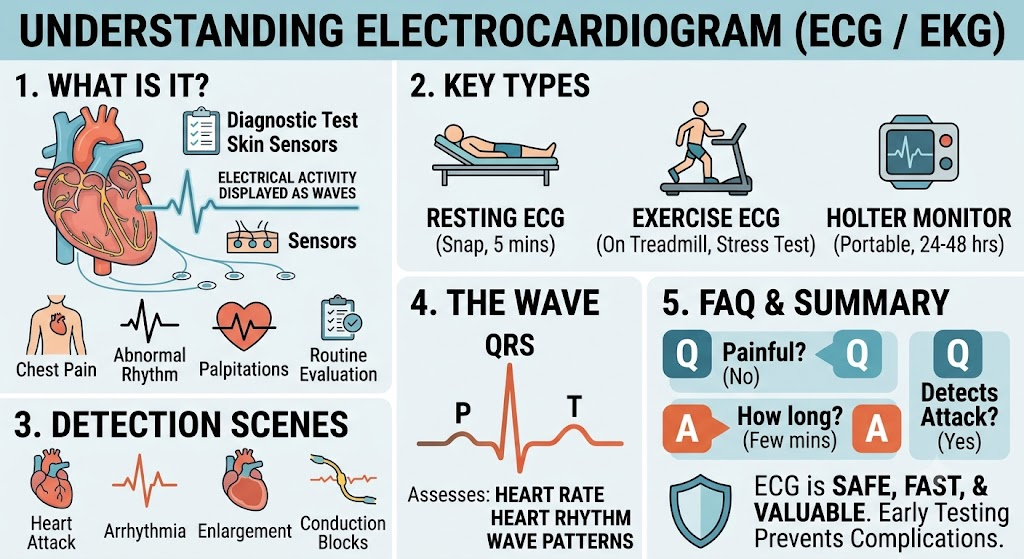
An Electrocardiogram (ECG) is a diagnostic test that measures the electrical activity of the heart through small sensors placed on the skin.
Every heartbeat begins with an electrical signal that travels through the heart muscle, causing it to contract and pump blood. An ECG records these electrical signals and displays them as waves on a monitor or paper printout.
Doctors Use ECG Results to Assess
- Heart rate
- Heart rhythm
- Electrical conduction through the heart
- Signs of heart muscle stress or damage
3. Why Is an ECG Done?
Doctors may recommend an ECG for several reasons.
3.1 Evaluation of Chest Pain
An ECG is commonly performed in people with chest pain to check for signs of:
- Heart attack
- Reduced blood supply to the heart
- Other cardiac conditions
3.2 Detection of Abnormal Heart Rhythms
An ECG can identify irregular heartbeats such as:
- Atrial fibrillation
- Slow heart rhythms
- Fast heart rhythms
- Extra heartbeats
3.3 Assessment of Palpitations
People who experience a racing, pounding, or irregular heartbeat may require an ECG to identify possible rhythm problems.
3.4 Investigation of Breathlessness or Dizziness
ECG testing may help determine whether symptoms are related to heart rhythm or other cardiac issues.
3.5 Routine Heart Evaluation
An ECG may be performed before certain surgeries, during health check-ups, or when monitoring existing heart conditions.
3.6 Monitoring Heart Treatment
Doctors may use ECGs to evaluate:
- Response to heart medicines
- Effects of certain treatments
- Changes in heart rhythm over time
4. What Does an ECG Detect?
An ECG can help detect several heart-related conditions.
4.1 Heart Attack
An ECG may show changes caused by reduced blood supply or damage to heart muscle.
4.2 Arrhythmias
ECG helps identify abnormal heart rhythms caused by problems with the heart’s electrical system.
Examples Include
- Atrial fibrillation
- Atrial flutter
- Tachycardia
- Bradycardia
4.3 Heart Enlargement
Certain ECG patterns may suggest enlargement or strain of heart chambers.
4.4 Electrolyte Abnormalities
Changes in minerals such as potassium and calcium can sometimes affect ECG patterns.
4.5 Conduction Problems
ECG can detect delays or interruptions in electrical signals traveling through the heart.
5. Types of ECG Tests
Different types of ECG monitoring may be used depending on symptoms and medical needs.
5.1 Resting ECG
A standard ECG is performed while the person is lying still.
It usually takes only a few minutes and provides a snapshot of the heart’s electrical activity.
5.2 Exercise ECG (Stress Test)
An exercise ECG records heart activity while the person walks on a treadmill or exercises.
It helps evaluate how the heart responds to physical stress.
5.3 Holter Monitoring
A Holter monitor is a portable ECG device worn for 24–48 hours or longer.
It helps detect irregular rhythms that may occur intermittently.
5.4 Event Monitor
An event monitor records heart activity when symptoms occur and may be used for longer periods.
6. How Is an ECG Performed?
An ECG procedure is simple and does not require any special preparation.
6.1 Before the Test
The healthcare provider may ask you to:
- Remove clothing from the upper body area
- Remove metal objects if required
- Lie comfortably on an examination table
6.2 During the Test
Small adhesive electrodes are placed on:
- The chest
- Arms
- Legs
These electrodes are connected to the ECG machine, which records the heart’s electrical signals.
The patient needs to remain still and breathe normally during the recording.
6.3 Duration of the Test
A standard ECG usually takes about 5–10 minutes, including preparation time.
7. Is ECG Painful?
An ECG is completely painless.
The electrodes only detect electrical signals from the skin. Some people may feel mild discomfort when the adhesive patches are removed.
8. How to Prepare for an ECG
Generally, no major preparation is needed.
Helpful Tips Include
- Wear comfortable clothing
- Avoid applying oils or lotions on the skin before the test
- Inform the doctor about current medications
- Remain relaxed during the procedure
9. Understanding ECG Results
An ECG report contains patterns called waves that represent different phases of heart activity.
Doctors evaluate:
9.1 Heart Rate
The number of heartbeats per minute.
9.2 Heart Rhythm
Whether the heartbeat is regular or irregular.
9.3 Electrical Signals
The timing and movement of electrical impulses through the heart.
9.4 Abnormal Patterns
Certain changes may suggest:
- Heart attack
- Arrhythmia
- Heart strain
- Conduction abnormalities
An abnormal ECG does not always mean serious heart disease. Doctors interpret ECG results along with symptoms, medical history, and other tests.
10. Limitations of ECG
Although ECG is an important heart test, it has some limitations.
An ECG:
- May not detect problems that occur only occasionally
- Does not always identify blocked arteries unless they affect electrical activity
- May require additional tests for complete diagnosis
Doctors may recommend other investigations such as echocardiography, stress testing, blood tests, or cardiac imaging depending on the situation.
11. When Should You Get an ECG?
An ECG may be recommended if you experience:
- Chest pain
- Shortness of breath
- Palpitations
- Dizziness
- Fainting episodes
- Unexplained fatigue
- Irregular heartbeat sensation
Risk Factors That May Require ECG Evaluation
- High blood pressure
- Diabetes
- High cholesterol
- Previous heart disease
- Family history of cardiac problems
12. Frequently Asked Questions About ECG
12.1 Is an ECG the Same as a Heart Scan?
No. An ECG records the electrical activity of the heart, while imaging tests such as echocardiograms show the structure and movement of the heart.
12.2 How Long Does an ECG Test Take?
A standard ECG usually takes only a few minutes.
12.3 Can an ECG Detect a Heart Attack?
Yes. ECG can show changes associated with many heart attacks, especially when performed during symptoms.
12.4 Is an Abnormal ECG Always Dangerous?
No. Some ECG abnormalities may be harmless, while others require further evaluation. A doctor interprets the result based on the complete clinical picture.
12.5 How Often Should I Get an ECG?
The need for an ECG depends on your symptoms, age, risk factors, and existing heart conditions. Your doctor can recommend the appropriate frequency.
13. Conclusion
An ECG is a safe, quick, and valuable test that provides important information about the heart’s electrical activity. It plays a major role in diagnosing heart rhythm problems, evaluating chest pain, and monitoring cardiovascular health.
Early evaluation of symptoms such as chest discomfort, palpitations, dizziness, or breathlessness can help detect heart problems and allow timely treatment.
Regular heart check-ups, healthy lifestyle choices, and appropriate cardiac testing are essential steps toward maintaining long-term heart health.