1. Introduction
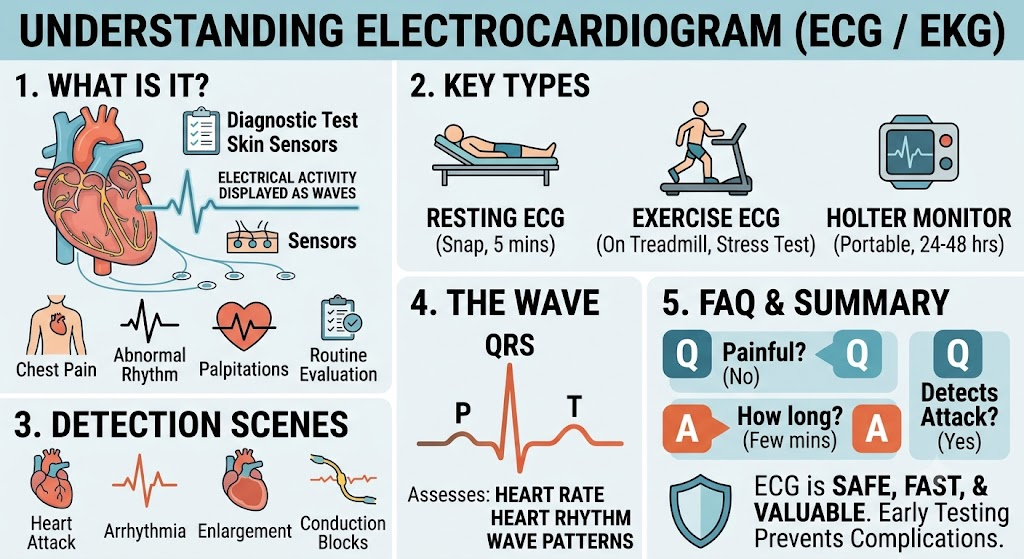
The heart maintains a regular rhythm through a complex electrical system that controls each heartbeat. Sometimes, abnormal heart rhythms may occur intermittently and may not be detected during a routine ECG performed for only a few seconds.
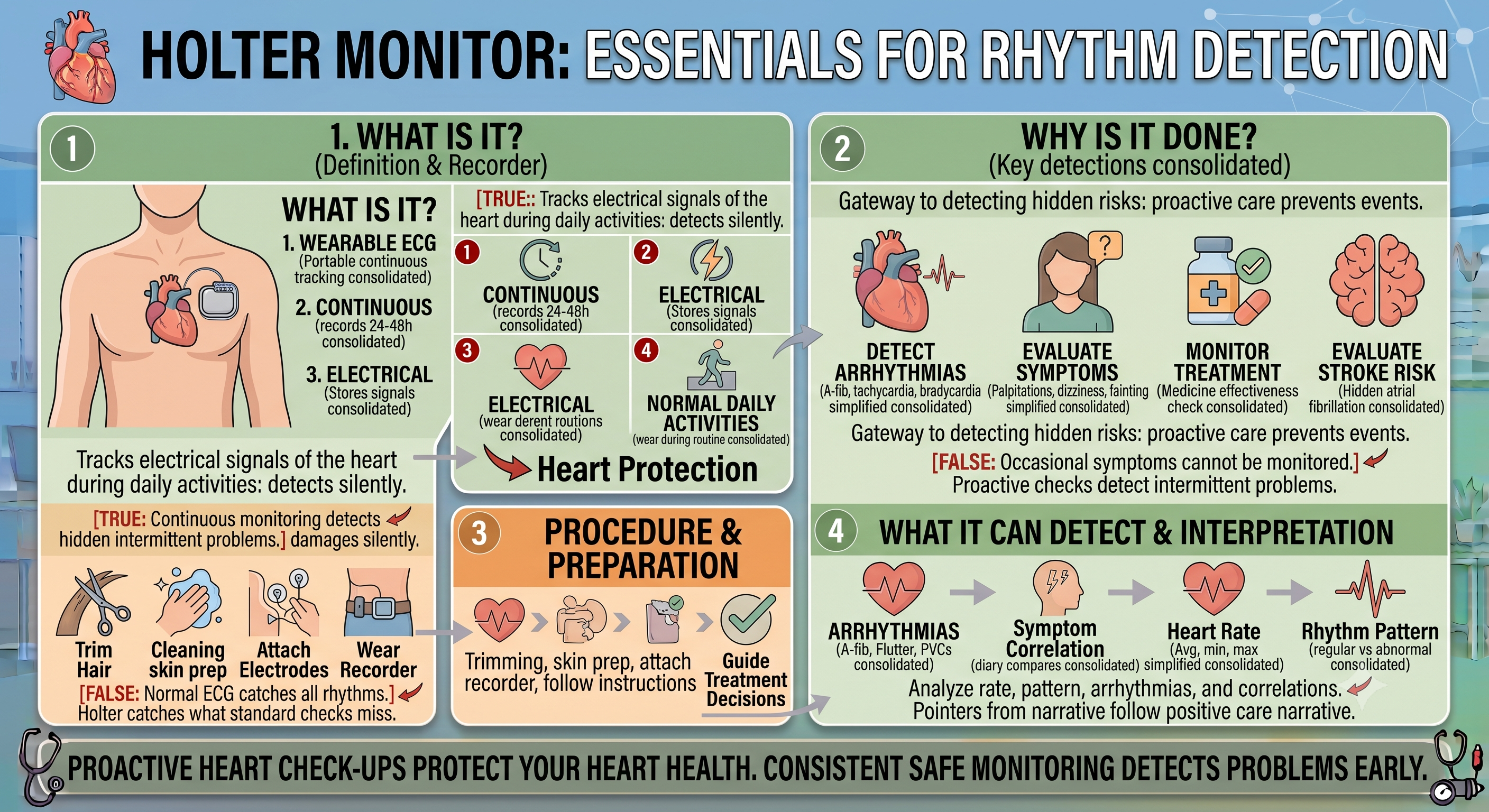
A Holter monitor is a portable device that continuously records the heart’s electrical activity, usually for 24 to 48 hours or longer. It helps doctors identify irregular heart rhythms, unexplained symptoms, and changes in heart function that may not appear during a standard ECG.
Holter monitoring is an important diagnostic tool in cardiology, especially for patients experiencing palpitations, dizziness, fainting episodes, chest discomfort, or unexplained fatigue.
2. What Is a Holter Monitor?
A Holter monitor is a small, wearable ECG recording device that continuously tracks the electrical signals of the heart during normal daily activities.
Unlike a standard ECG, which records heart activity for only a short period, a Holter monitor provides a longer observation period and captures changes that happen throughout the day and night.
A Holter monitor records:
- Heart rate
- Heart rhythm
- Electrical activity of the heart
- Episodes of abnormal heartbeats
The recorded information is later analysed by a healthcare professional to identify possible rhythm abnormalities.
3. Why Is a Holter Monitor Done?
Doctors recommend Holter monitoring when symptoms may be related to intermittent heart rhythm problems.
3.1 Detecting Irregular Heartbeats (Arrhythmias)
A Holter monitor can identify abnormal rhythms such as:
- Atrial fibrillation
- Atrial flutter
- Fast heart rhythms (tachycardia)
- Slow heart rhythms (bradycardia)
- Extra heartbeats
3.2 Evaluating Palpitations
People who feel:
- Racing heartbeat
- Fluttering sensation
- Skipped beats
- Pounding heartbeat
may undergo Holter monitoring to determine whether symptoms are caused by an arrhythmia.
3.3 Investigating Dizziness and Fainting
Some episodes of dizziness or fainting may occur due to temporary changes in heart rhythm.
A Holter monitor can help detect:
- Slow heart rates
- Pauses in heartbeat
- Abnormal rhythms
3.4 Monitoring Heart Treatment
Doctors may use Holter monitoring to check whether:
- Heart medicines are working effectively
- A pacemaker is functioning properly
- Rhythm control treatments are successful
3.5 Evaluating Stroke Risk
In some patients, prolonged monitoring can help detect hidden episodes of atrial fibrillation, which may increase the risk of stroke.
4. How Does a Holter Monitor Work?
A Holter monitor works like a continuous ECG recorder.
Small adhesive electrodes are placed on the chest and connected to the portable recording device.
The device:
- Records electrical signals from the heart
- Stores the information digitally
- Allows doctors to review heart activity over an extended period
Patients can continue most normal activities while wearing the monitor.
5. Types of Holter Monitoring
5.1 Traditional Holter Monitor
A standard Holter monitor usually records heart activity continuously for:
- 24 hours
- 48 hours
- Up to several days
It is commonly used for frequent symptoms.
5.2 Extended Holter Monitoring
Some monitors can record heart activity for longer periods, including:
- Several days
- Weeks
These are useful when symptoms occur less frequently.
5.3 Event Monitor
An event monitor records heart rhythm when symptoms occur. The patient may activate the device during an episode.
It is useful for occasional symptoms.
5.4 Patch-Based Wearable Monitors
Modern adhesive patch monitors are lightweight and comfortable and can continuously record heart activity for extended periods.
6. Who May Need a Holter Monitor?
A doctor may recommend Holter monitoring for people with:
- Unexplained palpitations
- Dizziness
- Fainting episodes
- Irregular heartbeat
- Suspected arrhythmia
- Previous heart rhythm problems
- History of stroke with unknown cause
- Certain heart medications requiring monitoring
7. Holter Monitor Procedure
7.1 Before the Test
Usually, no major preparation is required.
The healthcare provider may:
- Clean areas of skin where electrodes are placed
- Explain how to use the device
- Provide instructions about daily activities
Men with excessive chest hair may need a small area trimmed to improve electrode contact.
7.2 During the Test
The electrodes are attached to the chest and connected to the recorder.
The patient should:
- Wear the monitor as instructed
- Continue normal activities
- Record symptoms and activities in a diary
The diary helps doctors compare symptoms with recorded heart rhythms.
7.3 After the Test
After the monitoring period:
- The device is returned
- The recorded data is analysed
- The doctor reviews the results and recommends further management if needed
8. What Can a Holter Monitor Detect?
A Holter monitor can help identify:
8.1 Atrial Fibrillation
An irregular and often rapid heart rhythm originating from the upper chambers of the heart.
8.2 Bradycardia
An unusually slow heart rate that may cause dizziness or fainting.
8.3 Tachycardia
A fast heart rhythm that may cause palpitations or weakness.
8.4 Premature Beats
Extra heartbeats that may feel like skipped or irregular beats.
8.5 Heart Rhythm Pauses
Temporary interruptions in the heartbeat that may require treatment.
9. Understanding Holter Monitor Results
Doctors analyse several factors, including:
9.1 Heart Rate
The average, minimum, and maximum heart rates recorded.
9.2 Rhythm Pattern
Whether the heartbeat remains regular or shows abnormalities.
9.3 Arrhythmia Episodes
The number, duration, and type of irregular rhythms detected.
9.4 Symptom Correlation
Doctors compare reported symptoms with ECG recordings to determine whether symptoms are related to heart rhythm changes.
10. Advantages of Holter Monitoring
Holter monitoring offers several benefits:
- Continuous heart monitoring
- Detection of intermittent rhythm problems
- Non-invasive testing
- Ability to monitor normal daily activities
- Helps guide treatment decisions
11. Limitations of Holter Monitoring
Although useful, Holter monitoring has some limitations:
- Abnormal rhythms may not occur during the recording period
- Electrodes may become loose
- Some patients may experience mild skin irritation
If symptoms are very rare, doctors may recommend longer-term monitoring devices.
12. Tips While Wearing a Holter Monitor
Patients should:
- Keep the device dry unless instructed otherwise
- Avoid removing electrodes
- Maintain a symptom diary
- Continue normal activities
- Avoid activities that may damage the device
13. Frequently Asked Questions About Holter Monitoring
13.1 Is wearing a Holter monitor painful?
No. Holter monitoring is painless. Some people may experience mild skin irritation from the adhesive electrodes.
13.2 Can I sleep while wearing a Holter monitor?
Yes. Patients can usually sleep normally while wearing the device.
13.3 Can I take a shower with a Holter monitor?
Most traditional Holter monitors are not waterproof. Follow the instructions provided by your healthcare provider.
13.4 Does a Holter monitor detect heart blockage?
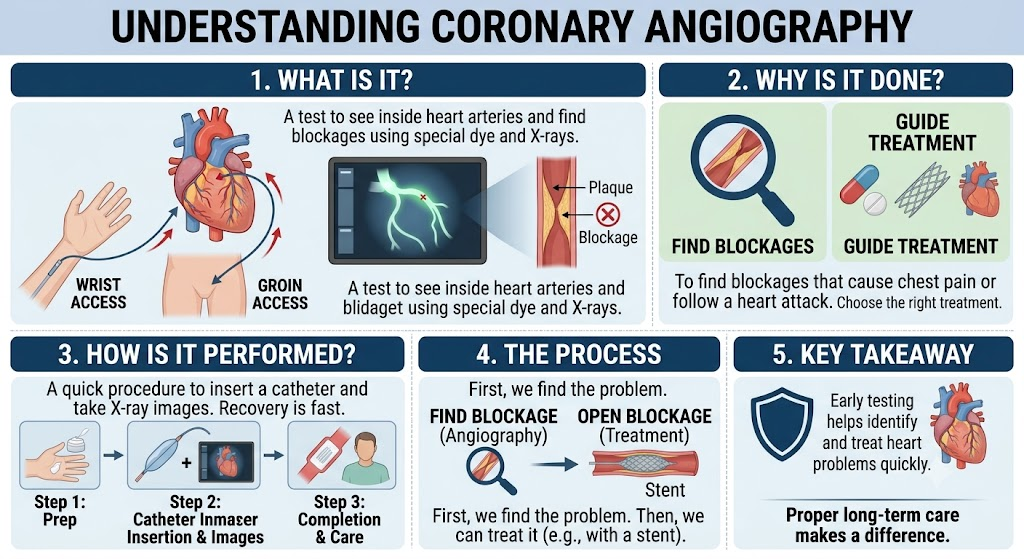
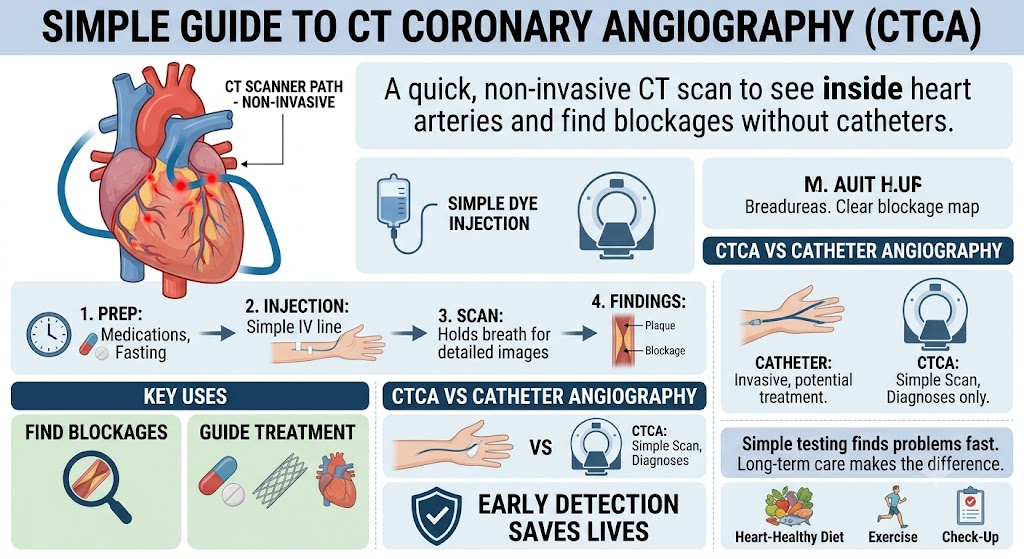
A Holter monitor mainly evaluates heart rhythm problems. Tests such as coronary angiography or CT coronary angiography may be required to assess blocked arteries.
13.5 How long does it take to get Holter results?
The time depends on the healthcare facility and the complexity of the recording analysis.
14. Conclusion
A Holter monitor is a valuable diagnostic tool that provides continuous information about the heart’s electrical activity over an extended period. It helps detect rhythm problems that may not appear during a routine ECG.
For people experiencing unexplained palpitations, dizziness, fainting, or irregular heartbeat sensations, Holter monitoring can provide important insights and help doctors choose the right treatment approach.
Early diagnosis and appropriate management of heart rhythm disorders play an important role in maintaining long-term cardiovascular health.