1. Introduction
Blood vessels play a vital role in delivering oxygen and nutrients to every part of the body. When these vessels become narrowed or blocked, blood flow can be reduced, affecting the health of tissues and organs.
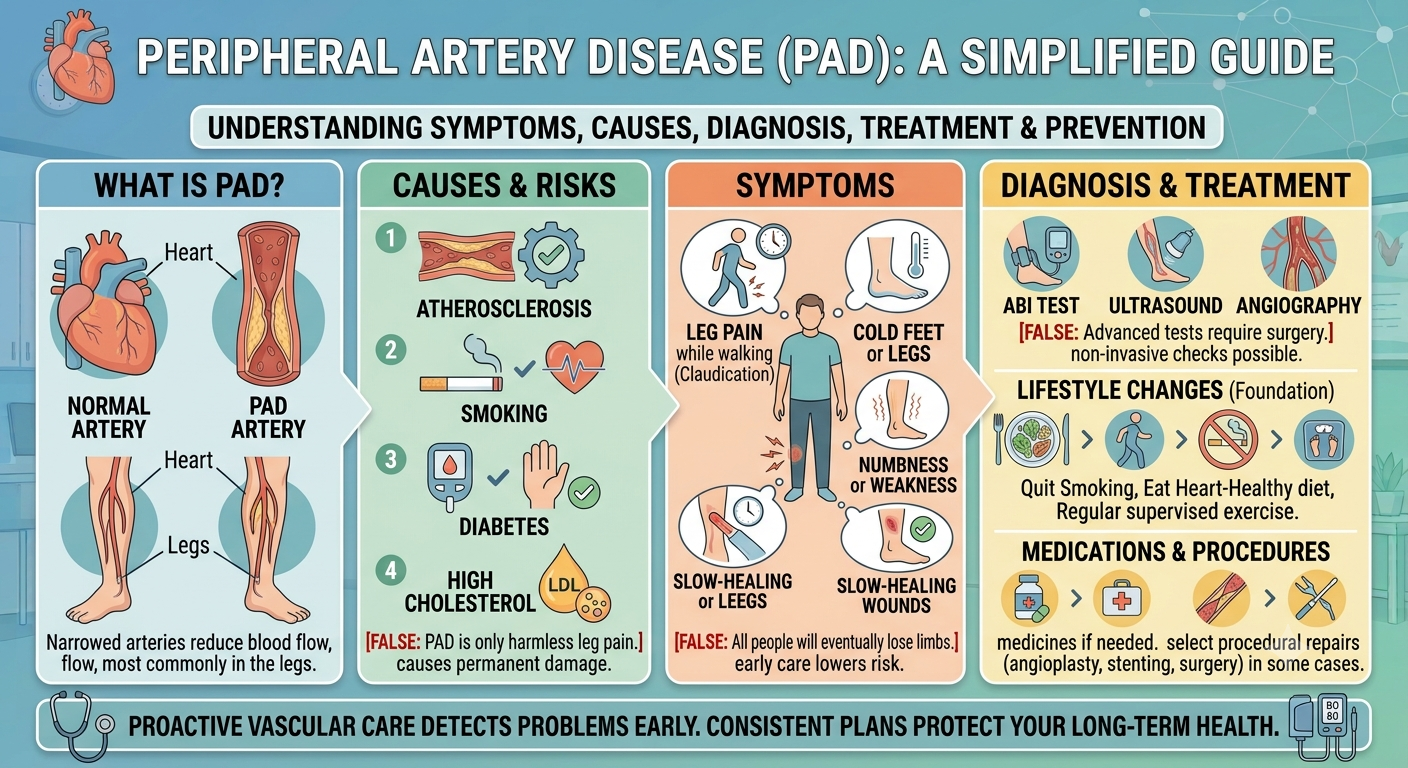
Peripheral Artery Disease (PAD) is a common circulation disorder in which the arteries that supply blood to the arms, legs, and other areas of the body become narrowed due to plaque buildup. It most commonly affects the arteries in the legs.
Reduced blood flow can cause leg pain, difficulty walking, slow wound healing, and, in severe cases, tissue damage. Early detection and proper management can help prevent serious complications.
Understanding the symptoms, causes, risk factors, diagnosis, treatment options, and prevention of Peripheral Artery Disease is essential for maintaining vascular health.
2. What Is Peripheral Artery Disease?
Peripheral Artery Disease (PAD) is a condition caused by the narrowing or blockage of peripheral arteries due to the buildup of fatty deposits, cholesterol, and other substances inside the artery walls.
This process is known as atherosclerosis.
When the Arteries Become Narrow:
- Less oxygen-rich blood reaches muscles and tissues.
- The legs may experience pain during physical activity.
- Wounds may heal slowly.
- Severe cases may result in tissue loss or gangrene.
Although PAD most commonly affects the legs, it can also involve arteries supplying the:
- Arms
- Stomach
- Kidneys
- Brain
3. Causes of Peripheral Artery Disease
The most common cause of PAD is atherosclerosis, although several conditions can contribute to artery damage.
3.1 Atherosclerosis (Plaque Buildup)
Over time, cholesterol, fats, calcium, and other materials accumulate inside artery walls.
This buildup makes arteries:
- Narrow
- Stiff
- Less flexible
As blood flow decreases, muscles and tissues receive less oxygen.
3.2 Blood Vessel Inflammation
Inflammation within blood vessels can damage artery walls and contribute to narrowing.
3.3 Blood Clot Formation
A blood clot may partially or completely block an artery, reducing blood supply to affected tissues.
3.4 Injury to Blood Vessels
Trauma or injury to arteries may sometimes contribute to circulation problems.
4. Risk Factors for Peripheral Artery Disease
Several factors increase the likelihood of developing PAD.
4.1 Smoking
Smoking is one of the strongest risk factors for PAD. Tobacco chemicals damage blood vessels and accelerate plaque formation.
4.2 Diabetes
High blood sugar levels damage arteries and increase the risk of circulation problems.
4.3 High Blood Pressure
Uncontrolled blood pressure can injure artery walls and promote plaque buildup.
4.4 High Cholesterol
Elevated LDL ("bad") cholesterol increases fatty deposits inside arteries.
4.5 Increasing Age
PAD becomes more common with advancing age, especially after 50 years.
4.6 Obesity
Excess body weight increases the risk of inflammation, diabetes, and cardiovascular disease.
4.7 Family History
A family history of PAD, heart disease, or stroke may increase risk.
4.8 Physical Inactivity
A sedentary lifestyle contributes to poor circulation and increased cardiovascular risk.
5. Symptoms of Peripheral Artery Disease
Some individuals with PAD may not experience noticeable symptoms, particularly during the early stages.
5.1 Leg Pain While Walking (Claudication)
The most common symptom is pain, cramping, or tiredness in the legs during walking or exercise.
The discomfort usually improves after resting.
It commonly affects the:
- Calves
- Thighs
- Hips
- Buttocks
5.2 Cold Feet or Legs
Reduced blood circulation may make one foot or leg feel colder than the other.
5.3 Numbness or Weakness
Poor blood supply can cause:
- Tingling
- Numbness
- Weakness in the legs
5.4 Skin Colour Changes
The skin may appear:
- Pale
- Bluish
- Different in colour due to reduced circulation
5.5 Slow-Healing Wounds
Cuts or sores on the feet and legs may take longer to heal.
5.6 Reduced Hair Growth
Poor circulation may reduce hair growth on the legs and feet.
5.7 Severe Symptoms
Advanced PAD may cause:
- Pain in the legs even while resting
- Open sores or ulcers
- Blackened skin or tissue death (gangrene)
These symptoms require urgent medical attention.
6. Complications of Peripheral Artery Disease
If left untreated, PAD may lead to serious health problems.
6.1 Critical Limb Ischemia
Severely reduced blood flow can cause:
- Persistent pain
- Non-healing wounds
- Tissue damage
6.2 Increased Risk of Heart Attack and Stroke
PAD is often a sign of widespread atherosclerosis. People with PAD have a higher risk of cardiovascular events.
6.3 Amputation
In severe cases involving extensive tissue damage, removal of the affected limb or tissue may become necessary.
7. Diagnosis of Peripheral Artery Disease
Doctors use several methods to diagnose PAD and assess blood flow.
7.1 Medical History and Physical Examination
Your doctor may assess:
- Symptoms
- Pulse strength in the legs
- Skin changes
- Presence of wounds
7.2 Ankle-Brachial Index (ABI) Test
ABI is a simple, non-invasive test that compares blood pressure in the ankle and arm.
A lower ankle pressure may indicate reduced blood flow.
7.3 Doppler Ultrasound
This imaging test uses sound waves to evaluate blood flow and identify narrowed or blocked arteries.
7.4 CT Angiography or MR Angiography
These imaging techniques create detailed pictures of blood vessels to locate narrowed or blocked arteries.
7.5 Angiography
In some cases, a contrast dye is injected into blood vessels to clearly identify artery blockages.
8. Treatment of Peripheral Artery Disease
Treatment aims to:
- Improve blood flow
- Reduce symptoms
- Prevent complications
8.1 Lifestyle Changes
Healthy lifestyle habits are the foundation of PAD management.
Recommendations:
- Stop smoking.
- Exercise regularly, particularly through a supervised walking program.
- Follow a heart-healthy diet.
- Maintain a healthy weight.
Heart-Healthy Diet Includes:
- Fruits and vegetables
- Whole grains
- Lean proteins
- Healthy fats
Limit:
- Saturated fats
- Trans fats
- Excess salt
- Processed foods
8.2 Medications
Doctors may prescribe medicines to:
- Reduce blood clot risk
- Control cholesterol
- Manage blood pressure
- Improve walking ability and reduce leg pain
9. Procedures and Surgery for PAD
If lifestyle changes and medications do not provide adequate relief, medical procedures may be recommended.
9.1 Angioplasty
A small balloon is used to widen a narrowed artery and improve blood flow.
9.2 Stent Placement
A small mesh tube (stent) may be inserted to keep the artery open.
9.3 Bypass Surgery
A new pathway is created around a blocked artery using a healthy blood vessel graft.
10. Prevention of Peripheral Artery Disease
Many PAD risk factors can be reduced through healthy lifestyle choices.
Preventive Measures:
- Avoid smoking.
- Exercise regularly.
- Maintain healthy cholesterol levels.
- Control blood pressure.
- Manage diabetes effectively.
- Eat a balanced diet.
- Maintain a healthy weight.
- Attend regular health check-ups.
11. When Should You See a Doctor?
Consult a healthcare professional if you experience:
- Leg pain while walking
- Persistent numbness in the feet
- Slow-healing wounds
- Changes in skin colour
- Cold feet or legs
Seek Emergency Medical Care Immediately If You Develop:
- Severe leg pain
- Sudden loss of circulation
- Signs of infection
- Blackened skin
- Non-healing ulcers with severe pain
12. Frequently Asked Questions (FAQs)
12.1 Is Peripheral Artery Disease Dangerous?
Yes. PAD can significantly increase the risk of heart attack, stroke, and serious circulation problems if left untreated.
12.2 Can Peripheral Artery Disease Be Cured?
PAD may not always be completely reversible, but appropriate treatment can improve symptoms, increase mobility, and reduce complications.
12.3 Does Walking Help Peripheral Artery Disease?
Yes. A structured walking program improves circulation and enables many people with PAD to walk farther with less discomfort.
12.4 Who Is Most at Risk for PAD?
Individuals with the following conditions are at higher risk:
- Diabetes
- Smoking history
- High cholesterol
- High blood pressure
- Older age
12.5 Is PAD Related to Heart Disease?
Yes. PAD is often a sign that atherosclerosis is also affecting arteries supplying the heart and brain.
13. Conclusion
Peripheral Artery Disease (PAD) is a common but often overlooked circulatory disorder that reduces blood flow to the limbs. Recognising symptoms early, managing risk factors, and receiving timely treatment can prevent serious complications, including critical limb ischemia, heart attack, stroke, and amputation.
A combination of:
- Quitting smoking
- Exercising regularly
- Following a heart-healthy diet
- Controlling diabetes, cholesterol, and blood pressure
- Maintaining a healthy weight
- Attending regular medical check-ups
can significantly improve circulation, protect blood vessel health, and enhance long-term quality of life.
Key Takeaway:
Early diagnosis, healthy lifestyle choices, and consistent medical care are essential for slowing the progression of Peripheral Artery Disease, reducing complications, and maintaining overall cardiovascular health.