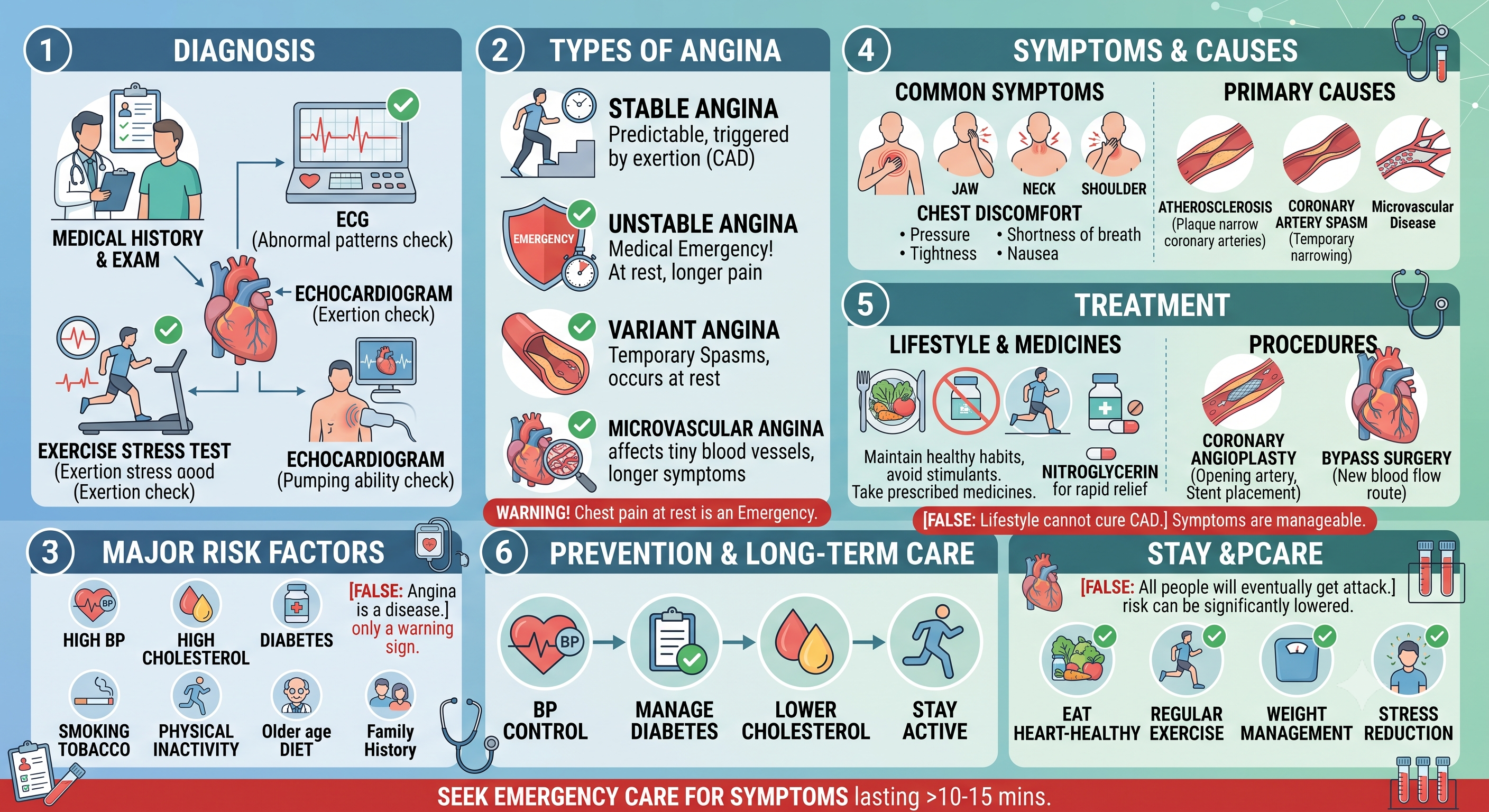
1. What Is Angina?
Angina, also called angina pectoris, is a type of chest pain or discomfort that occurs when the heart muscle does not receive enough oxygen-rich blood. It is not a disease by itself but a warning sign that the heart may not be receiving adequate blood supply. In most cases, angina is caused by narrowing or blockage of the coronary arteries due to coronary artery disease (CAD).
The pain may feel like pressure, heaviness, squeezing, tightness, or burning in the chest. It can also spread to the shoulders, arms, neck, jaw, or back. Recognizing angina symptoms early and seeking prompt medical evaluation can help prevent serious complications such as a heart attack.
2. Types of Angina
Understanding the different types of angina helps determine the appropriate treatment and level of urgency.
2.1 Stable Angina
Stable angina is the most common form. It usually occurs during physical activity, emotional stress, climbing stairs, exercising, exposure to cold weather, or after eating a heavy meal. The symptoms follow a predictable pattern and typically improve within a few minutes after resting or taking prescribed medication such as nitroglycerin.
Features of Stable Angina
- Predictable episodes
- Triggered by exertion or stress
- Lasts a few minutes
- Relieved by rest or medication
2.2 Unstable Angina
Unstable angina is a medical emergency. It may occur suddenly, even while resting, and is often more severe, longer-lasting, and less responsive to medication. It can be an early warning sign of an impending heart attack and requires immediate medical attention.
Warning Signs
- Chest pain at rest
- Increasing frequency of attacks
- Pain lasting longer than usual
- Symptoms not relieved by rest
- New or worsening chest discomfort
2.3 Variant (Prinzmetal's) Angina
This less common type is caused by temporary spasms of the coronary arteries rather than permanent blockage. Episodes often occur at rest, especially during the night or early morning.
2.4 Microvascular Angina
Microvascular angina affects the tiny blood vessels of the heart rather than the major coronary arteries. Symptoms may last longer than those of stable angina and can occur even when larger arteries appear normal during imaging tests.
3. Symptoms of Angina
The symptoms of angina vary from person to person. While chest discomfort is the hallmark symptom, some individuals may experience additional signs.
3.1 Common Symptoms
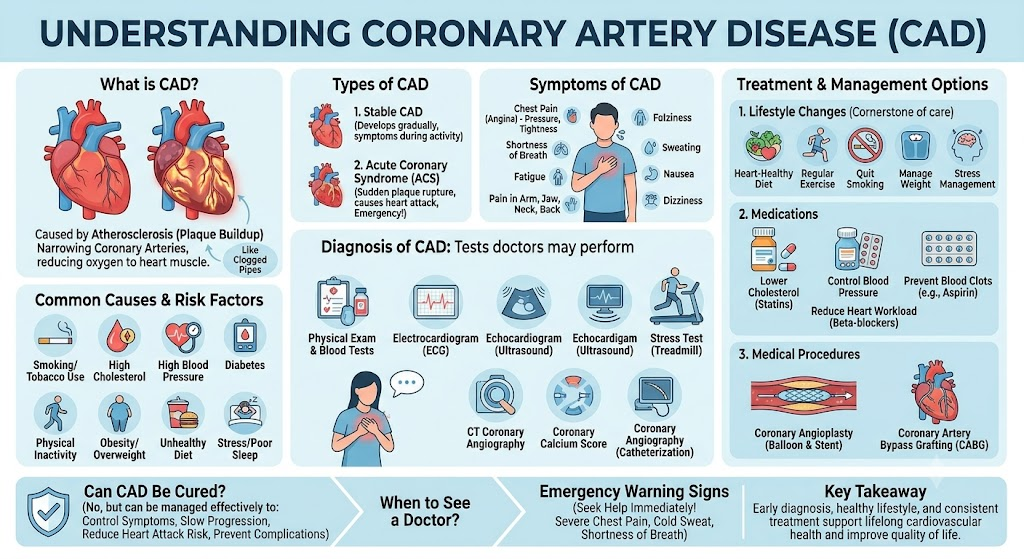
- Chest pain or pressure
- Tightness or squeezing sensation in the chest
- Burning or heaviness in the chest
- Pain spreading to the left arm, both arms, shoulders, neck, jaw, or back
- Shortness of breath
- Fatigue during physical activity
- Dizziness or lightheadedness
- Cold sweating
- Nausea or indigestion-like discomfort
- Feeling unusually weak
Women, older adults, and people with diabetes may experience atypical symptoms such as fatigue, nausea, breathlessness, or back pain without significant chest discomfort.
4. What Causes Angina?
Angina develops when the heart muscle receives less oxygen-rich blood than it needs. Several conditions can reduce blood flow to the heart.
4.1 Coronary Artery Disease
The most common cause of angina is coronary artery disease, in which cholesterol deposits and fatty plaques narrow the coronary arteries, restricting blood flow.
4.2 Atherosclerosis
Atherosclerosis refers to the gradual buildup of plaque inside artery walls. As plaques enlarge, blood vessels become narrower, making it harder for oxygen-rich blood to reach the heart muscle.
4.3 Coronary Artery Spasm
Temporary tightening of the coronary arteries can reduce blood flow even without significant plaque buildup. These spasms may occur spontaneously or be triggered by stress, smoking, certain medications, or cold temperatures.
4.4 Microvascular Disease
Damage or dysfunction of the heart's smallest blood vessels can reduce circulation and lead to angina symptoms.
4.5 High Blood Pressure
Persistent high blood pressure forces the heart to work harder, increasing its oxygen demand and contributing to angina.
4.6 Heart Valve Disease
Conditions such as aortic stenosis reduce blood flow from the heart and may produce angina symptoms.
4.7 Anemia
A reduced number of red blood cells lowers oxygen delivery throughout the body, including the heart.
4.8 Cardiomyopathy
Diseases affecting the heart muscle can increase oxygen demand and reduce blood supply.
5. Risk Factors for Angina
Several lifestyle and medical factors increase the likelihood of developing angina.
These include:
- High blood pressure
- High cholesterol
- Diabetes
- Smoking or tobacco use
- Obesity
- Physical inactivity
- Unhealthy diet
- Chronic stress
- Family history of heart disease
- Older age
- Excessive alcohol consumption
Managing these risk factors can significantly lower the chances of developing coronary artery disease and angina.
6. How Is Angina Diagnosed?
Diagnosing angina involves understanding symptoms, evaluating risk factors, and performing appropriate cardiac tests.
A healthcare provider may recommend:
- Medical history and physical examination
- Electrocardiogram (ECG)
- Exercise stress test
- Echocardiogram
- Blood tests
- CT coronary angiography
- Coronary angiography (cardiac catheterization)
These tests help determine the cause of chest pain and identify any blockages in the coronary arteries.
7. Treatment for Angina
Treatment focuses on relieving symptoms, improving blood flow to the heart, preventing heart attacks, and reducing future cardiovascular risk.
7.1 Lifestyle Changes
Healthy lifestyle modifications play a major role in managing angina.
Recommended measures include:
- Eat a heart-healthy diet rich in fruits, vegetables, whole grains, lean proteins, and healthy fats.
- Exercise regularly as advised by your healthcare provider.
- Maintain a healthy body weight.
- Stop smoking and avoid tobacco products.
- Limit alcohol intake.
- Manage blood pressure, cholesterol, and blood sugar levels.
- Get adequate sleep.
- Practice stress management through meditation, yoga, breathing exercises, or relaxation techniques.
7.2 Medications
Depending on the severity of the condition, medications may include:
- Nitroglycerin for rapid relief of chest pain
- Antiplatelet medications
- Beta-blockers
- Calcium channel blockers
- Statins to lower cholesterol
- ACE inhibitors or ARBs
- Other medications to reduce heart workload and improve circulation
Always take medicines exactly as prescribed by your healthcare provider.
7.3 Procedures and Surgery
Coronary Angioplasty and Stenting
A small balloon is used to widen the blocked artery, and a stent is placed to keep it open.
Coronary Artery Bypass Graft (CABG)
This surgical procedure creates a new pathway around blocked coronary arteries, improving blood flow to the heart.
8. Can Angina Be Prevented?
Although not every case can be prevented, maintaining good heart health greatly reduces the risk.
Preventive strategies include:
- Eat a balanced, heart-friendly diet.
- Stay physically active.
- Maintain a healthy weight.
- Quit smoking.
- Control diabetes, blood pressure, and cholesterol.
- Reduce stress.
- Attend regular medical check-ups.
- Take prescribed medications consistently.
9. When Should You Seek Emergency Medical Care?
Seek immediate medical attention if you experience:
- Chest pain lasting longer than 10–15 minutes
- Chest pain while resting
- Pain becoming more frequent or severe
- Chest discomfort not relieved by prescribed medication
- Chest pain with severe shortness of breath
- Fainting or loss of consciousness
- Excessive sweating, nausea, or vomiting along with chest pain
Do not ignore persistent chest pain, as it may indicate a heart attack.
10. Frequently Asked Questions (FAQs)
10.1 Is angina the same as a heart attack?
No. Angina indicates reduced blood flow to the heart but does not always cause permanent damage. However, unstable angina may be a warning sign of an upcoming heart attack.
10.2 Is angina dangerous?
Yes. If left untreated, angina increases the risk of heart attack, heart failure, abnormal heart rhythms, and other cardiovascular complications.
10.3 Can angina be cured?
The underlying cause often cannot be completely cured, but symptoms can usually be effectively managed with medications, healthy lifestyle changes, and medical procedures when necessary.
10.4 Can exercise help people with angina?
Yes. Regular physical activity performed under medical guidance can strengthen the heart, improve circulation, and reduce angina symptoms.
10.5 What foods should people with angina eat?
A heart-healthy diet should include:
- Fresh fruits and vegetables
- Whole grains
- Lean proteins
- Fish rich in omega-3 fatty acids
- Nuts and seeds
- Low-fat dairy products
- Healthy oils such as olive oil
Limit processed foods, sugary drinks, excess salt, saturated fats, and trans fats.
11. Conclusion
Angina is an important warning sign that the heart may not be receiving enough oxygen-rich blood. While it commonly results from coronary artery disease, other heart conditions and lifestyle factors can also contribute. Early recognition of symptoms, timely diagnosis, and appropriate treatment are essential to reduce the risk of heart attack and other serious complications.
Adopting a heart-healthy lifestyle, controlling medical conditions such as diabetes and hypertension, taking prescribed medications, and attending regular medical check-ups can significantly improve quality of life and long-term heart health. Anyone experiencing persistent or unexplained chest pain should seek immediate medical evaluation rather than ignoring the symptoms.