1. Introduction
The human heart normally beats in a steady, regular rhythm to pump blood efficiently throughout the body. This consistent heartbeat ensures that oxygen-rich blood reaches all vital organs and tissues.
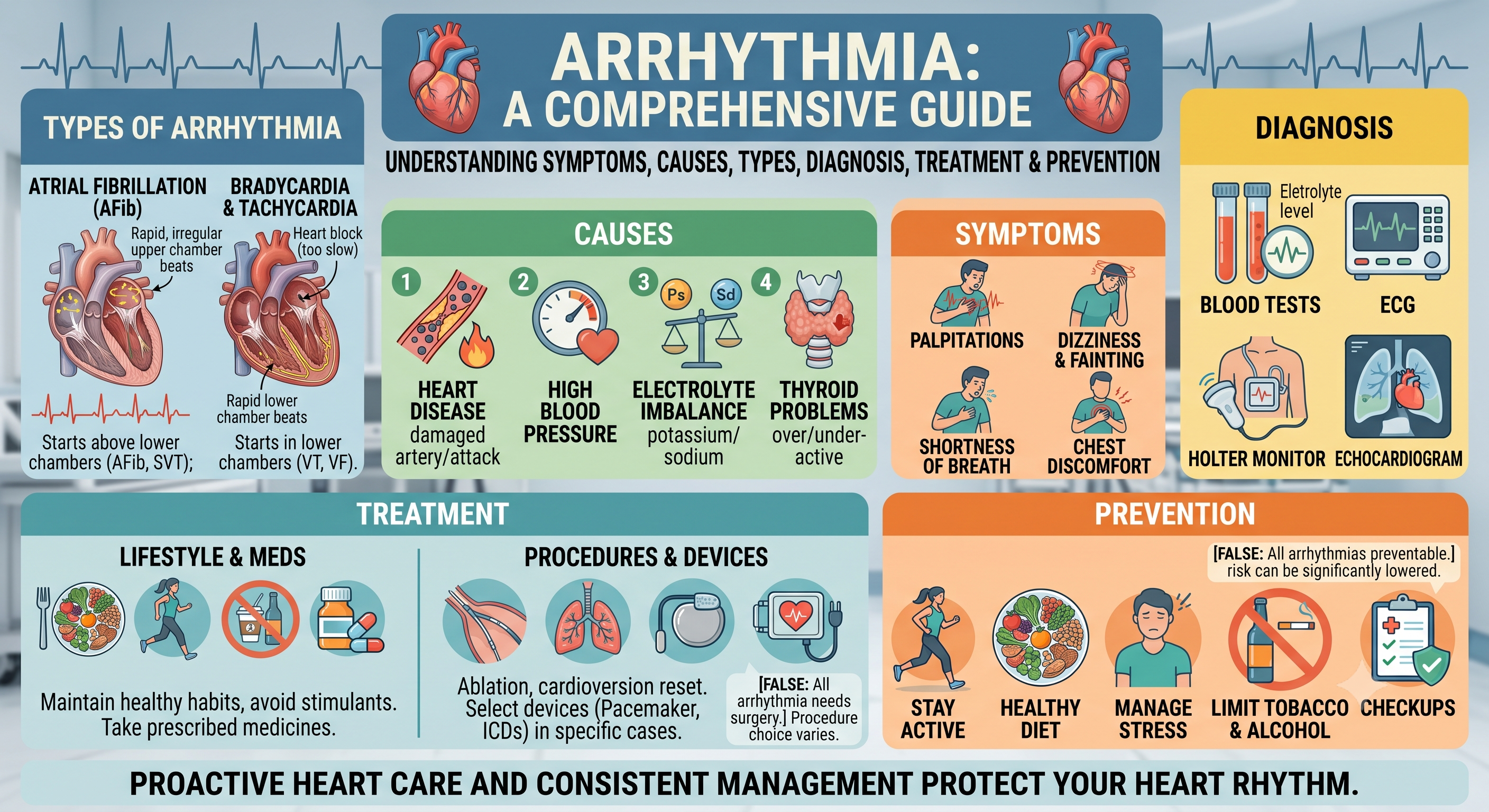
An arrhythmia is a condition in which the heart beats too fast, too slowly, or irregularly due to problems with the heart's electrical system. While some arrhythmias are harmless and may not require treatment, others can reduce the heart's ability to pump blood effectively and may become life-threatening if left untreated.
Understanding the types, causes, symptoms, diagnosis, treatment options, and prevention of arrhythmia can help with early detection and better heart health management.
2. What Is Arrhythmia?
An arrhythmia is an abnormal heart rhythm caused by disruptions in the electrical signals that control the heartbeat.
Normally, the heart's electrical system coordinates the contraction of the heart chambers. When these signals become disrupted, the heart may:
- Beat faster than normal (tachycardia)
- Beat slower than normal (bradycardia)
- Beat irregularly or unpredictably
A normal resting adult heart rate is generally 60–100 beats per minute (bpm), although this can vary depending on age, fitness level, and overall health.
3. Types of Arrhythmias
Arrhythmias are classified based on where they originate and how they affect heart rate.
3.1 Atrial Fibrillation (AFib)
Atrial fibrillation is one of the most common arrhythmias.
In this condition, the upper chambers of the heart (atria) beat rapidly and irregularly, reducing the heart's pumping efficiency and increasing the risk of blood clots and stroke.
Common Risk Factors Include:
- High blood pressure
- Heart valve disease
- Age-related changes
- Heart failure
3.2 Atrial Flutter
Atrial flutter occurs when the atria beat very rapidly but in a more regular pattern than atrial fibrillation.
Common Symptoms:
- Fast heartbeat
- Shortness of breath
- Dizziness
3.3 Supraventricular Tachycardia (SVT)
SVT is a rapid heart rhythm that begins above the heart's lower chambers (ventricles).
Symptoms May Include:
- Palpitations
- Chest discomfort
- Light-headedness
3.4 Ventricular Tachycardia (VT)
Ventricular tachycardia originates in the lower chambers (ventricles).
It can reduce the heart's ability to pump blood effectively and may become dangerous, especially in people with previous heart disease or heart damage.
3.5 Ventricular Fibrillation (VF)
Ventricular fibrillation is a life-threatening medical emergency.
Instead of contracting normally, the ventricles quiver, preventing effective blood circulation throughout the body.
Immediate emergency treatment is essential.
3.6 Bradycardia
Bradycardia occurs when the heart beats slower than normal.
Although a slow heart rate may be normal in healthy individuals, particularly athletes, it becomes a concern when it reduces blood flow to the body.
3.7 Heart Block
Heart block occurs when electrical signals from the upper chambers (atria) do not properly reach the lower chambers (ventricles).
Depending on the severity, treatment may include:
- Monitoring
- Medications
- Pacemaker implantation
4. Symptoms of Arrhythmia
Some people with arrhythmia experience no symptoms, while others may notice significant changes in their heartbeat.
4.1 Palpitations
A sensation that the heart is:
- Racing
- Fluttering
- Skipping beats
- Pounding unusually hard
4.2 Dizziness or Light-headedness
Irregular heart rhythms may reduce blood flow to the brain, causing dizziness or feelings of faintness.
4.3 Shortness of Breath
An inefficient heartbeat may reduce oxygen delivery to the body, causing breathlessness.
4.4 Chest Discomfort
Some people experience:
- Pressure
- Tightness
- Chest discomfort
4.5 Fatigue
Poor circulation may lead to:
- Persistent tiredness
- Reduced exercise tolerance
4.6 Fainting (Syncope)
Severe arrhythmias may temporarily reduce blood flow to the brain, resulting in fainting.
4.7 Emergency Symptoms
Seek immediate medical attention if arrhythmia symptoms occur with:
- Severe chest pain
- Difficulty breathing
- Loss of consciousness
- Sudden weakness on one side of the body
5. Causes of Arrhythmia
Arrhythmias develop due to conditions that affect the heart's electrical system.
5.1 Heart Disease
Conditions that increase arrhythmia risk include:
- Coronary artery disease
- Heart attack
- Heart failure
- Cardiomyopathy
5.2 High Blood Pressure
Long-term hypertension can enlarge and weaken the heart, increasing the likelihood of abnormal heart rhythms.
5.3 Heart Valve Disorders
Abnormal heart valves may alter blood flow and interfere with normal electrical activity.
5.4 Electrolyte Imbalance
Minerals such as:
- Potassium
- Sodium
- Calcium
- Magnesium
play essential roles in regulating heart rhythm. Imbalances can trigger arrhythmias.
5.5 Thyroid Disorders
Both an overactive and underactive thyroid can influence heart rate and rhythm.
5.6 Age-Related Changes
The heart's electrical conduction system may become less efficient with ageing.
5.7 Lifestyle Factors
Certain habits increase arrhythmia risk, including:
- Excessive caffeine intake
- Alcohol misuse
- Smoking
- Recreational drug use
- Chronic stress
- Sleep deprivation
5.8 Certain Medications
Some prescription and over-the-counter medications may affect heart rhythm in susceptible individuals.
6. Risk Factors for Arrhythmia
Factors that increase the likelihood of developing arrhythmias include:
- Older age
- Family history of rhythm disorders
- High blood pressure
- Diabetes
- Obesity
- Smoking
- Previous heart disease
- Sleep apnoea
- Excessive alcohol consumption
7. How Is Arrhythmia Diagnosed?
Doctors use several tests to diagnose abnormal heart rhythms.
7.1 Electrocardiogram (ECG)
An ECG records the heart's electrical activity and is the primary test used to detect arrhythmias.
7.2 Holter Monitoring
A portable ECG records heart rhythm continuously for 24 hours or longer, helping detect intermittent arrhythmias.
7.3 Event Monitor
An event monitor records heart activity when symptoms occur and may be worn for several weeks.
7.4 Echocardiogram
An echocardiogram evaluates:
- Heart structure
- Heart muscle function
- Heart valve condition
7.5 Exercise Stress Test
This test assesses how the heart performs during physical activity.
7.6 Electrophysiological Study (EPS)
An EPS is an advanced procedure used to identify the precise source of abnormal electrical signals within the heart.
8. Treatment Options for Arrhythmia
Treatment depends on the type of arrhythmia, severity of symptoms, and overall heart health.
8.1 Lifestyle Changes
Healthy habits can reduce arrhythmia risk and improve overall cardiovascular health.
Recommendations:
- Maintain a balanced diet.
- Exercise regularly as advised by your doctor.
- Reduce excessive caffeine intake.
- Avoid smoking.
- Limit alcohol consumption.
- Manage stress effectively.
- Maintain a healthy body weight.
8.2 Medications
Doctors may prescribe medicines to:
- Control heart rate.
- Restore a normal heart rhythm.
- Prevent blood clots, especially in atrial fibrillation.
Medication selection depends on the individual's condition and risk factors.
8.3 Cardioversion
Cardioversion restores a normal heart rhythm using:
- Controlled electrical shocks
- Specific rhythm-controlling medications
8.4 Catheter Ablation
Catheter ablation uses heat (radiofrequency) or cold (cryoablation) to destroy small areas of heart tissue causing abnormal electrical signals.
8.5 Pacemaker
A pacemaker is a small implanted device that helps regulate slow heart rhythms (bradycardia).
8.6 Implantable Cardioverter Defibrillator (ICD)
An ICD continuously monitors heart rhythm and delivers life-saving treatment if dangerous rhythms occur.
9. Prevention of Arrhythmia
Although not all arrhythmias can be prevented, healthy lifestyle choices help reduce the risk.
Preventive Measures:
- Control blood pressure and cholesterol.
- Manage diabetes effectively.
- Exercise regularly.
- Eat a heart-healthy diet.
- Maintain a healthy body weight.
- Avoid tobacco products.
- Limit alcohol intake.
- Get adequate sleep.
- Attend regular heart check-ups.
10. When Should You See a Doctor?
Consult a healthcare professional if you experience:
- Frequent heart palpitations
- Unexplained dizziness
- Repeated fainting episodes
- Shortness of breath
- Chest discomfort
- Persistent fatigue
Seek Emergency Medical Care Immediately If You Experience:
- Severe chest pain
- Loss of consciousness
- Difficulty breathing
- Sudden weakness or collapse
11. Frequently Asked Questions (FAQs)
11.1 Is Arrhythmia Dangerous?
Some arrhythmias are harmless, while others can interfere with heart function and increase the risk of stroke, heart failure, or sudden cardiac arrest.
11.2 Can Stress Cause Arrhythmia?
Yes. Stress and anxiety can trigger temporary rhythm disturbances, particularly in individuals who are already prone to arrhythmias.
11.3 Can Arrhythmia Be Cured?
Many arrhythmias can be successfully managed with lifestyle changes, medications, catheter ablation, or implanted devices, depending on the underlying cause.
11.4 Is a Fast Heartbeat Always an Arrhythmia?
No. Exercise, emotional stress, fever, and anxiety can temporarily increase heart rate. An arrhythmia specifically refers to an abnormal electrical rhythm of the heart.
11.5 Can Arrhythmia Lead to Stroke?
Yes. Certain arrhythmias, particularly atrial fibrillation, increase the risk of blood clot formation, which can lead to stroke.
12. Conclusion
Arrhythmia is a common heart rhythm disorder that ranges from mild and harmless to potentially life-threatening. Recognising symptoms early, obtaining an accurate diagnosis, and receiving appropriate treatment can help prevent serious complications.
Maintaining a heart-healthy lifestyle, controlling underlying medical conditions, attending regular cardiac check-ups, and following your healthcare provider's recommendations are essential for maintaining a healthy heart rhythm.
Key Takeaway:
Early diagnosis, timely treatment, and healthy lifestyle habits are the keys to managing arrhythmias, reducing complications, and protecting long-term cardiovascular health.