1. Introduction
The heart is one of the most important organs in the human body. It continuously pumps oxygen-rich blood and essential nutrients to every tissue and organ, helping the body function properly.
Heart failure is a condition in which the heart cannot pump blood efficiently enough to meet the body’s requirements. It does not mean that the heart has completely stopped working. Instead, the heart’s pumping ability becomes reduced or the heart becomes unable to fill with enough blood.
Heart failure is a progressive condition, but with early diagnosis, appropriate treatment, and healthy lifestyle changes, many people can manage symptoms and maintain a better quality of life.
2. What Is Heart Failure?
Heart failure, also known as congestive heart failure (CHF), occurs when the heart muscle becomes weak, stiff, or damaged, affecting its ability to circulate blood effectively.
When the heart cannot pump properly, blood may flow more slowly and fluid can accumulate in different parts of the body, especially the lungs, legs, and abdomen. This fluid buildup can cause breathlessness, swelling, and fatigue.
Heart failure can develop suddenly (acute heart failure) or gradually over time (chronic heart failure).
3. Types of Heart Failure
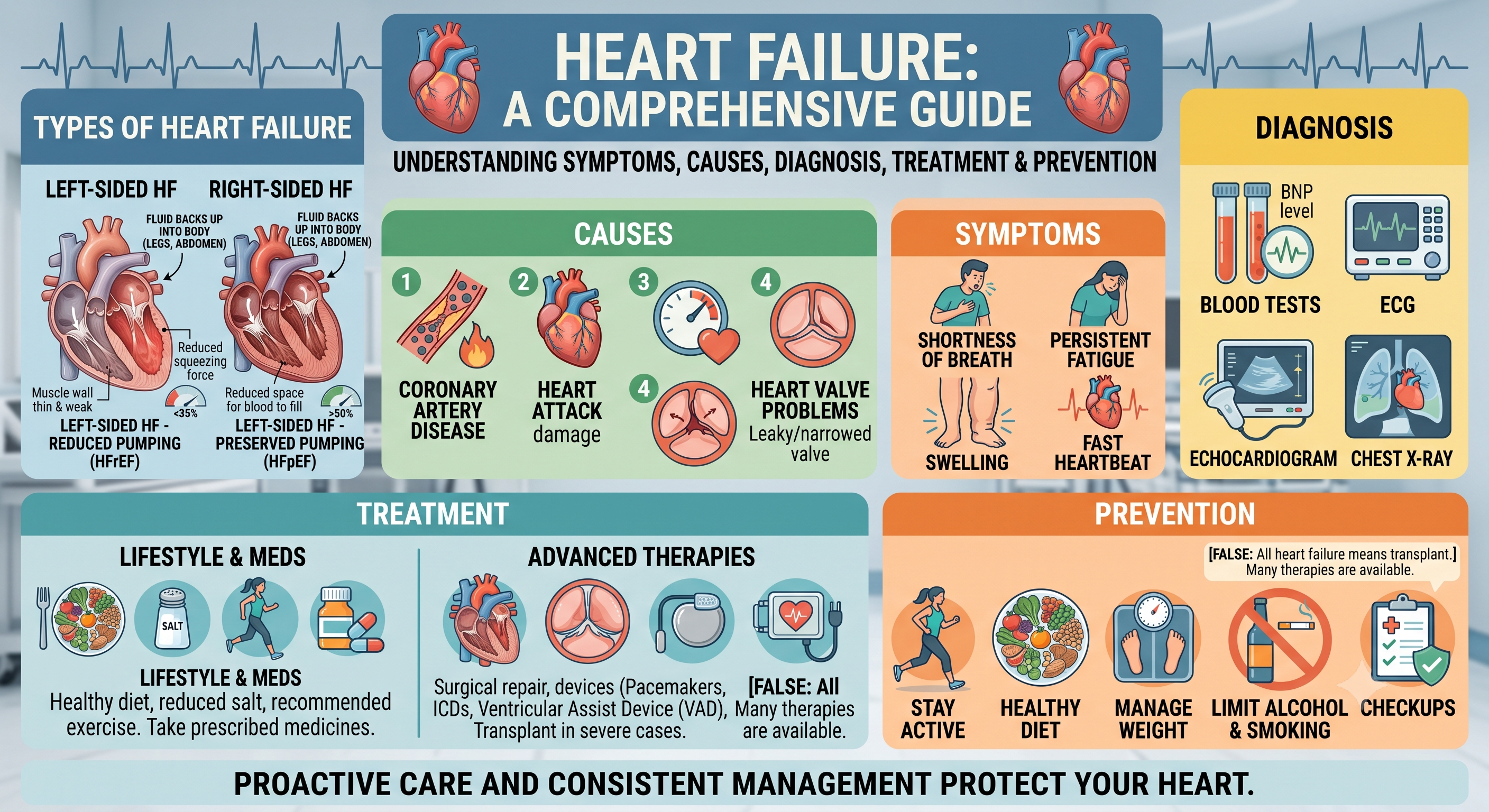
Heart failure can be classified based on which side of the heart is affected and how the heart functions.
3.1 Left-Sided Heart Failure
The left side of the heart is responsible for pumping oxygen-rich blood throughout the body. Since it performs most of the pumping work, left-sided heart failure is the most common type.
It is divided into two categories:
Heart Failure With Reduced Ejection Fraction (HFrEF)
In this condition, the heart muscle becomes weak and cannot contract strongly enough to pump sufficient blood.
Heart Failure With Preserved Ejection Fraction (HFpEF)
In this condition, the heart muscle becomes stiff and cannot relax properly. Although the heart may squeeze normally, it cannot fill with enough blood.
3.2 Right-Sided Heart Failure
Right-sided heart failure occurs when the right side of the heart cannot pump blood effectively to the lungs.
It often develops due to long-term left-sided heart failure, lung diseases, or increased pressure in the blood vessels of the lungs.
3.3 Congestive Heart Failure
Congestive heart failure occurs when poor heart function causes fluid to accumulate in the lungs and other body tissues.
Common signs include:
- Breathing difficulty
- Swelling in the legs and ankles
- Sudden weight gain
- Reduced physical ability
This condition requires medical evaluation and proper management.
4. Causes of Heart Failure
Heart failure can occur due to several conditions that damage or weaken the heart muscle.
4.1 Coronary Artery Disease
Coronary artery disease occurs when fatty deposits build up inside the arteries supplying blood to the heart.
This narrowing reduces oxygen supply to the heart muscle and forces the heart to work harder. Over time, this can weaken the heart and lead to failure.
4.2 Heart Attack
A heart attack occurs when blood flow to a part of the heart becomes blocked.
The affected heart muscle may become damaged or die due to lack of oxygen. This damage can reduce the heart’s ability to pump effectively.
4.3 High Blood Pressure
Uncontrolled high blood pressure increases the workload on the heart.
Over time, the heart muscle may become enlarged, thickened, and weaker, increasing the risk of heart failure.
4.4 Diabetes
High blood sugar levels can damage blood vessels and contribute to coronary artery disease.
People with diabetes also have a higher chance of developing conditions such as high blood pressure and obesity, which increase heart failure risk.
4.5 Cardiomyopathy (Heart Muscle Disease)
Cardiomyopathy refers to diseases that affect the heart muscle.
It may occur due to:
- Genetic factors
- Viral infections
- Alcohol-related heart damage
- Other medical conditions
A weakened heart muscle may not pump blood effectively.
4.6 Heart Valve Problems
Heart valves control blood flow through the chambers of the heart.
When valves become narrowed or start leaking, the heart must work harder to maintain blood circulation. Untreated valve problems may eventually lead to heart failure.
4.7 Irregular Heart Rhythm (Arrhythmia)
A normal heartbeat follows a regular rhythm that allows effective pumping.
Conditions causing abnormal heart rhythms can reduce the heart’s efficiency and may contribute to heart failure if untreated.
4.8 Lifestyle-Related Causes
Certain habits can increase heart failure risk, including:
- Smoking
- Excessive alcohol consumption
- Poor diet
- Physical inactivity
- Obesity
4.9 Other Medical Conditions
Heart failure risk may also increase due to:
- Kidney disease
- Thyroid disorders
- Sleep apnea
- Certain infections
- Some chemotherapy medicines
5. Symptoms of Heart Failure
Symptoms may vary depending on the severity of heart failure and how quickly it develops.
Common symptoms include:
5.1 Shortness of Breath
Fluid buildup in the lungs can make breathing difficult, especially during exercise or while lying down.
5.2 Persistent Fatigue
Reduced blood flow means muscles and organs receive less oxygen, causing weakness and tiredness.
5.3 Swelling in Legs and Ankles
When the heart cannot pump efficiently, fluid may accumulate in the lower body, causing swelling.
5.4 Sudden Weight Gain
Rapid weight gain may occur due to fluid retention rather than increased body fat.
5.5 Fast or Irregular Heartbeat
The heart may beat faster to compensate for reduced pumping ability.
5.6 Cough or Wheezing
Fluid congestion in the lungs can cause persistent coughing or breathing sounds.
5.7 Dizziness and Reduced Concentration
Lower blood supply to the brain may cause dizziness, confusion, or difficulty concentrating.
5.8 Reduced Appetite
Fluid buildup around the digestive organs can cause bloating, nausea, and reduced appetite.
6. Risk Factors for Heart Failure
Several factors can increase the possibility of developing heart failure:
- High blood pressure
- Diabetes
- High cholesterol
- Previous heart attack
- Obesity
- Smoking
- Excess alcohol intake
- Family history of heart disease
- Age-related heart changes
- Congenital heart problems
- Lack of physical activity
7. How Is Heart Failure Diagnosed?
Doctors use a combination of medical history, physical examination, and diagnostic tests.
7.1 Blood Tests
Blood tests may check:
- Kidney function
- Electrolyte levels
- Heart-related markers such as BNP and NT-proBNP
These markers may increase when the heart is under stress.
7.2 Electrocardiogram (ECG)
An ECG records the electrical activity of the heart and helps identify:
- Irregular heartbeat
- Previous heart attacks
- Electrical abnormalities
7.3 Echocardiogram
An echocardiogram uses ultrasound technology to examine:
- Heart size
- Heart muscle movement
- Pumping ability
- Valve function
It is one of the most important tests for diagnosing heart failure.
7.4 Chest X-Ray
A chest X-ray may show:
- Enlarged heart size
- Fluid buildup in the lungs
7.5 Exercise Stress Test
This test evaluates how the heart performs during physical activity.
7.6 Cardiac Catheterisation
A catheter-based test may be performed to examine blood flow through heart arteries and identify blockages.
8. Stages of Heart Failure
Heart failure is generally classified into four stages:
8.1 Stage A – Risk of Heart Failure
People have risk factors such as high blood pressure, diabetes, or family history but no structural heart damage.
8.2 Stage B – Pre-Heart Failure
Changes in heart structure or function may be present, but symptoms have not developed.
8.3 Stage C – Symptomatic Heart Failure
Patients have diagnosed heart failure with symptoms such as breathlessness and swelling.
8.4 Stage D – Advanced Heart Failure
This is severe heart failure where symptoms continue despite treatment and advanced therapies may be required.
9. Treatment of Heart Failure
Treatment aims to improve symptoms, slow disease progression, and improve heart function.
9.1 Lifestyle Changes
Important lifestyle measures include:
- Eating a heart-healthy diet
- Reducing salt intake
- Exercising as recommended
- Maintaining healthy body weight
- Avoiding smoking
- Limiting alcohol
- Monitoring blood pressure and blood sugar
Healthy lifestyle changes can reduce strain on the heart and help improve overall quality of life.
9.2 Medications
Doctors may prescribe medicines such as:
- ACE inhibitors or similar heart-protective medicines
- Beta-blockers
- Diuretics to reduce fluid buildup
- Medicines that improve heart function
- Drugs to control heart rhythm
Medication choice depends on the type and severity of heart failure.
9.3 Surgical and Device-Based Treatments
When medicines are not enough, advanced treatments may be considered.
Coronary Bypass Surgery
Bypass surgery improves blood supply to the heart by creating a new pathway around blocked arteries.
Heart Valve Repair or Replacement
Damaged valves may be repaired or replaced to improve heart function.
Pacemaker and Cardiac Resynchronization Therapy (CRT)
These devices help coordinate heart contractions and improve pumping efficiency in selected patients.
Implantable Cardioverter Defibrillator (ICD)
An ICD monitors heart rhythm and can correct dangerous abnormal rhythms.
Ventricular Assist Device (VAD)
A mechanical pump may be used to support heart function in severe cases.
Heart Transplant
For selected patients with advanced heart failure, heart transplantation may be considered.
10. How to Prevent Heart Failure
Many cases of heart failure can be prevented by controlling risk factors.
Steps for better heart health include:
- Maintain healthy blood pressure
- Control diabetes
- Keep cholesterol levels in check
- Exercise regularly
- Eat nutritious foods
- Maintain a healthy weight
- Avoid tobacco
- Limit alcohol
- Get regular health check-ups
Following a heart-healthy lifestyle can reduce the risk of developing heart failure and other cardiovascular diseases.
11. When Should You Seek Medical Help?
Contact a doctor if you experience:
- Increasing breathlessness
- New or worsening swelling
- Sudden weight gain
- Chest pain
- Fainting episodes
- Rapid heartbeat
- Severe tiredness
Seek emergency medical care for severe chest pain, extreme breathing difficulty, or symptoms of a heart attack.
12. Frequently Asked Questions About Heart Failure
12.1 Does Heart Failure Mean the Heart Has Stopped Working?
No. Heart failure means the heart is not pumping blood efficiently. Many people continue to live active lives with proper treatment.
12.2 Can Heart Failure Be Cured?
Heart failure is usually a long-term condition, but treatment can improve symptoms, slow progression, and enhance quality of life.
12.3 Can a Healthy Lifestyle Improve Heart Failure?
Yes. Healthy eating, regular activity, quitting smoking, and controlling medical conditions can support better heart function.
12.4 Can Infections Cause Heart Failure?
Some viral infections can affect the heart muscle and cause inflammation, leading to a condition called cardiomyopathy that may result in heart failure.
12.5 Is Heart Failure an Emergency?
Sudden worsening of symptoms, severe breathing difficulty, chest pain, or fainting requires immediate medical attention.
13. Conclusion
Heart failure is a serious cardiovascular condition, but early diagnosis and proper management can significantly improve outcomes.
Recognising symptoms, controlling risk factors, following prescribed treatments, and maintaining a heart-healthy lifestyle are essential steps in protecting heart function.
Regular check-ups and timely medical care can help people with heart failure live healthier and more fulfilling lives.