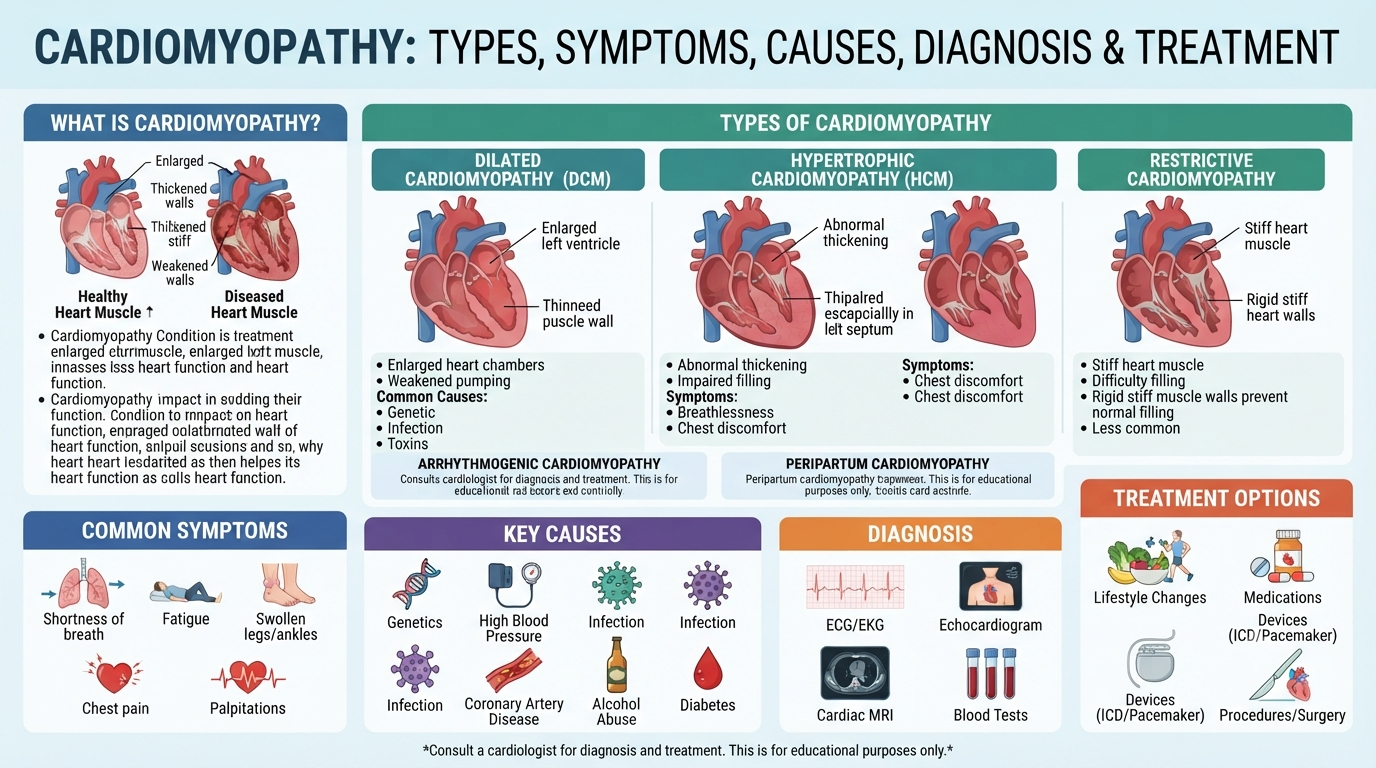
Cardiomyopathy: Types, Symptoms, Causes, Diagnosis & Treatment
Cardiomyopathy is a condition that affects the heart muscle and can make it harder for the heart to pump blood effectively. Learn about the different types of cardiomyopathy, symptoms, causes, diagnosis, treatment and when to see a cardiologist.
Cardiomyopathy can affect people of different ages and may develop gradually or, in some cases, suddenly. Some people have no symptoms initially, while others may develop breathlessness, fatigue, swelling of the legs, chest discomfort or abnormal heart rhythms.
Early diagnosis and appropriate treatment can help manage symptoms, reduce complications and protect heart function.
What Is Cardiomyopathy?
Cardiomyopathy is a disease of the heart muscle.
It can cause the heart muscle to become:
- Enlarged
- Thickened
- Stiff
- Weakened
- Abnormally shaped
These changes can affect how efficiently the heart fills with blood or pumps blood around the body.
Depending on the type and severity, cardiomyopathy may increase the risk of heart failure, abnormal heart rhythms and other cardiovascular complications.
What Are the Symptoms of Cardiomyopathy?
Some people with cardiomyopathy have no symptoms, particularly in the early stages.
When symptoms occur, they may include:
- Breathlessness, particularly during exertion
- Fatigue or reduced exercise tolerance
- Swelling of the feet, ankles or legs
- Chest discomfort
- Palpitations or awareness of the heartbeat
- Dizziness
- Fainting or near-fainting
- Breathlessness when lying down
- Difficulty sleeping because of breathlessness
- Rapid weight gain due to fluid retention
The symptoms can vary depending on the type of cardiomyopathy and whether heart function is affected.
What Causes Cardiomyopathy?
There are many possible causes.
Some forms are related to inherited genetic changes, while others can develop because of medical conditions, infections, toxins or other factors.
Possible causes include:
- Genetic or inherited conditions
- Coronary artery disease
- Previous heart attack
- Long-standing high blood pressure
- Certain infections
- Diabetes and metabolic disorders
- Thyroid disorders
- Excessive alcohol consumption
- Certain medications or toxins
- Pregnancy-related changes in the heart
- Nutritional deficiencies
- Certain autoimmune or inflammatory conditions
In some patients, despite detailed evaluation, a specific cause may not be identified.
Types of Cardiomyopathy
There are several types of cardiomyopathy. The most common forms include dilated, hypertrophic and restrictive cardiomyopathy.
1. Dilated Cardiomyopathy
In dilated cardiomyopathy (DCM), the heart chambers, particularly the left ventricle, become enlarged and the heart muscle may become weaker.
This can reduce the heart's pumping ability and may lead to heart failure.
Possible causes include genetic factors, infections, certain toxins, alcohol, some medications and other medical conditions.
In some cases, no definite cause is identified.
2. Hypertrophic Cardiomyopathy
Hypertrophic cardiomyopathy (HCM) causes abnormal thickening of the heart muscle, most commonly involving the left ventricle.
The thickened muscle can make it harder for the heart to relax and fill with blood.
Some people have no symptoms, while others may experience:
- Breathlessness
- Chest discomfort
- Palpitations
- Dizziness
- Fainting, particularly during exertion
Hypertrophic cardiomyopathy can sometimes run in families, which is why evaluation of close relatives may be recommended in appropriate cases.
3. Restrictive Cardiomyopathy
In restrictive cardiomyopathy, the heart muscle becomes stiff and does not relax normally.
The heart may have difficulty filling with blood even when its pumping function appears relatively preserved.
Restrictive cardiomyopathy is less common and can be associated with certain systemic or infiltrative diseases.
4. Arrhythmogenic Cardiomyopathy
Arrhythmogenic cardiomyopathy is a condition in which structural changes in the heart muscle can be associated with abnormal heart rhythms.
It may have a genetic component and can sometimes occur in younger individuals.
Palpitations, fainting or certain abnormal heart rhythms may be important warning signs.
5. Peripartum Cardiomyopathy
Peripartum cardiomyopathy is a form of heart muscle weakness that develops toward the end of pregnancy or during the months following delivery.
Symptoms may include:
- Breathlessness
- Swelling
- Fatigue
- Difficulty lying flat
- Rapid heartbeat
Because some symptoms can resemble normal pregnancy or postpartum changes, persistent or worsening symptoms should be evaluated.
Cardiomyopathy vs Heart Failure
Cardiomyopathy and heart failure are related but they are not the same thing.
Cardiomyopathy refers to a disease or abnormality of the heart muscle.
Heart failure is a clinical syndrome in which the heart cannot meet the body's needs adequately or can do so only at increased filling pressures.
Some types of cardiomyopathy can eventually cause heart failure, but not everyone with cardiomyopathy has heart failure.
How Is Cardiomyopathy Diagnosed?
Diagnosis usually involves a combination of medical history, examination and cardiac investigations.
ECG
An electrocardiogram (ECG) records the electrical activity of the heart.
It can identify abnormal rhythms and other changes that may provide clues to underlying heart muscle disease.
Echocardiogram
An echocardiogram is one of the most important tests for evaluating cardiomyopathy.
It can assess:
- Heart chamber size
- Heart muscle thickness
- Pumping function
- Heart valve function
- Filling patterns
- Certain structural abnormalities
Holter Monitoring
If palpitations, dizziness or suspected abnormal heart rhythms are present, a Holter monitor or other ambulatory ECG monitoring may be recommended.
Cardiac MRI
Cardiac magnetic resonance imaging (MRI) can provide detailed information about heart muscle structure and tissue characteristics.
It may be particularly useful when the underlying cause of cardiomyopathy is uncertain or when specific structural or infiltrative conditions are being considered.
Blood Tests
Blood tests may be used to evaluate possible contributing conditions, depending on the clinical situation.
These may include assessment of:
- Thyroid function
- Kidney function
- Electrolytes
- Blood sugar
- Blood counts
- Other relevant markers
Genetic Testing
Genetic evaluation may be considered in selected patients, particularly when an inherited cardiomyopathy is suspected or there is a significant family history.
How Is Cardiomyopathy Treated?
Treatment depends on:
- The type of cardiomyopathy
- Symptoms
- Heart pumping function
- Presence of abnormal heart rhythms
- The underlying cause
- Other medical conditions
Treatment may include lifestyle measures, medicines, procedures or device therapy.
Medicines
Depending on the type and clinical situation, treatment may include medicines that:
- Reduce the workload on the heart
- Control blood pressure
- Improve heart failure outcomes
- Control abnormal heart rhythms
- Reduce fluid retention
- Reduce the risk of blood clots when indicated
The appropriate medication combination is individualized for each patient.
Treatment of the Underlying Cause
If a specific cause is identified, treating that condition can be an important part of management.
For example, treatment may be directed toward thyroid disease, nutritional deficiencies, inflammatory conditions or other underlying disorders.
Devices
Some patients with cardiomyopathy may benefit from devices such as:
- Implantable cardioverter-defibrillators (ICDs)
- Cardiac resynchronization therapy (CRT)
- Pacemakers in selected situations
These are considered based on individual risk and heart function.
Procedures and Surgery
Certain forms of cardiomyopathy may require specialized procedures or surgery.
The treatment depends on the specific type of cardiomyopathy and the patient's symptoms and anatomy.
Can Cardiomyopathy Be Cured?
It depends on the underlying cause and type.
Some forms of cardiomyopathy can improve significantly with appropriate treatment, particularly when a reversible cause is identified and treated.
Other forms are chronic conditions that require long-term monitoring and treatment.
Improvement in heart pumping function does not necessarily mean that medical treatment can be stopped. Medication changes should always be discussed with the treating doctor.
Can Cardiomyopathy Lead to Heart Failure?
Yes.
Some forms of cardiomyopathy can weaken the heart muscle and eventually lead to heart failure.
However, early diagnosis and appropriate treatment can help manage symptoms and reduce the risk of complications in many patients.
Can Cardiomyopathy Cause Palpitations?
Yes.
Some forms of cardiomyopathy are associated with abnormal heart rhythms.
Palpitations may feel like:
- Racing heartbeat
- Skipped beats
- Fluttering in the chest
- Strong or pounding heartbeat
Persistent palpitations, particularly when associated with dizziness, fainting, chest discomfort or breathlessness, should be evaluated.
Is Cardiomyopathy Hereditary?
Some types of cardiomyopathy can have a genetic or inherited component.
If a person is diagnosed with an inherited form of cardiomyopathy, doctors may recommend assessment of close family members depending on the specific condition.
Genetic counseling and testing may be appropriate in selected situations.
Can Exercise Be Done With Cardiomyopathy?
Exercise recommendations depend on the type of cardiomyopathy, symptoms, heart function and risk of abnormal heart rhythms.
Some patients can safely participate in regular physical activity, while others may need individualized restrictions or specialist assessment.
Do not start high-intensity exercise programs without appropriate medical advice if you have been diagnosed with cardiomyopathy.
When Should You See a Cardiologist?
Consider a cardiology evaluation if you have:
- Unexplained breathlessness
- Reduced exercise tolerance
- Recurrent palpitations
- Unexplained fainting
- Persistent chest discomfort
- Leg or ankle swelling
- A family history of cardiomyopathy or sudden cardiac death
- An abnormal ECG or echocardiogram
- A previous diagnosis of heart muscle disease
Seek Urgent Medical Attention If You Have
- Severe or sudden breathlessness
- Persistent or severe chest pain
- Fainting
- Rapid or irregular heartbeat associated with dizziness
- Sudden worsening of swelling or breathlessness
These symptoms can have several causes but may sometimes indicate a serious cardiac problem.
Frequently Asked Questions About Cardiomyopathy
What is the most common type of cardiomyopathy?
There are several types, and their frequency varies between populations and underlying causes. Dilated and hypertrophic cardiomyopathy are among the commonly recognized forms.
Is cardiomyopathy the same as a weak heart?
Not exactly.
Some cardiomyopathies cause reduced heart pumping function, but others primarily affect heart muscle thickness, stiffness or electrical stability.
Can cardiomyopathy be detected on an echocardiogram?
Yes. Echocardiography is an important investigation for identifying many structural and functional abnormalities associated with cardiomyopathy.
Can a person with cardiomyopathy live a normal life?
Many people with cardiomyopathy can lead active lives with appropriate diagnosis, treatment and follow-up. The outlook varies considerably depending on the type, severity, cause and response to treatment.
Does cardiomyopathy always cause heart failure?
No.
Cardiomyopathy can increase the risk of heart failure, but not everyone with cardiomyopathy develops heart failure.
Can cardiomyopathy occur in young people?
Yes.
Some inherited cardiomyopathies can present during childhood, adolescence or early adulthood, although cardiomyopathy can occur at any age.
Key Takeaway
Cardiomyopathy is a group of conditions that affect the heart muscle.
It can cause changes in heart muscle thickness, size, stiffness or pumping function. Some forms are inherited, while others may develop because of coronary artery disease, medical conditions, infections, toxins or other causes.
Symptoms such as unexplained breathlessness, palpitations, fainting, chest discomfort or reduced exercise tolerance should not be ignored.
Early evaluation with appropriate tests such as an ECG, echocardiogram, Holter monitoring or cardiac MRI can help identify the underlying problem and guide treatment.