Introduction
The heart is a powerful muscular organ responsible for pumping blood throughout the body. Inside the heart are four valves that act like gates, controlling the direction of blood flow between the heart chambers and major blood vessels.
Heart valve disease occurs when one or more of these valves become damaged, narrowed, or unable to close properly. As a result, the heart may need to work harder to maintain normal blood circulation.
Some valve problems may remain mild for years, while others can affect heart function and lead to serious complications if not treated.
Understanding the types, causes, symptoms, diagnosis, and treatment options for heart valve disease can help in early detection and better heart health management.
What Is Heart Valve Disease?
Heart valve disease is a condition in which one or more heart valves do not function normally.
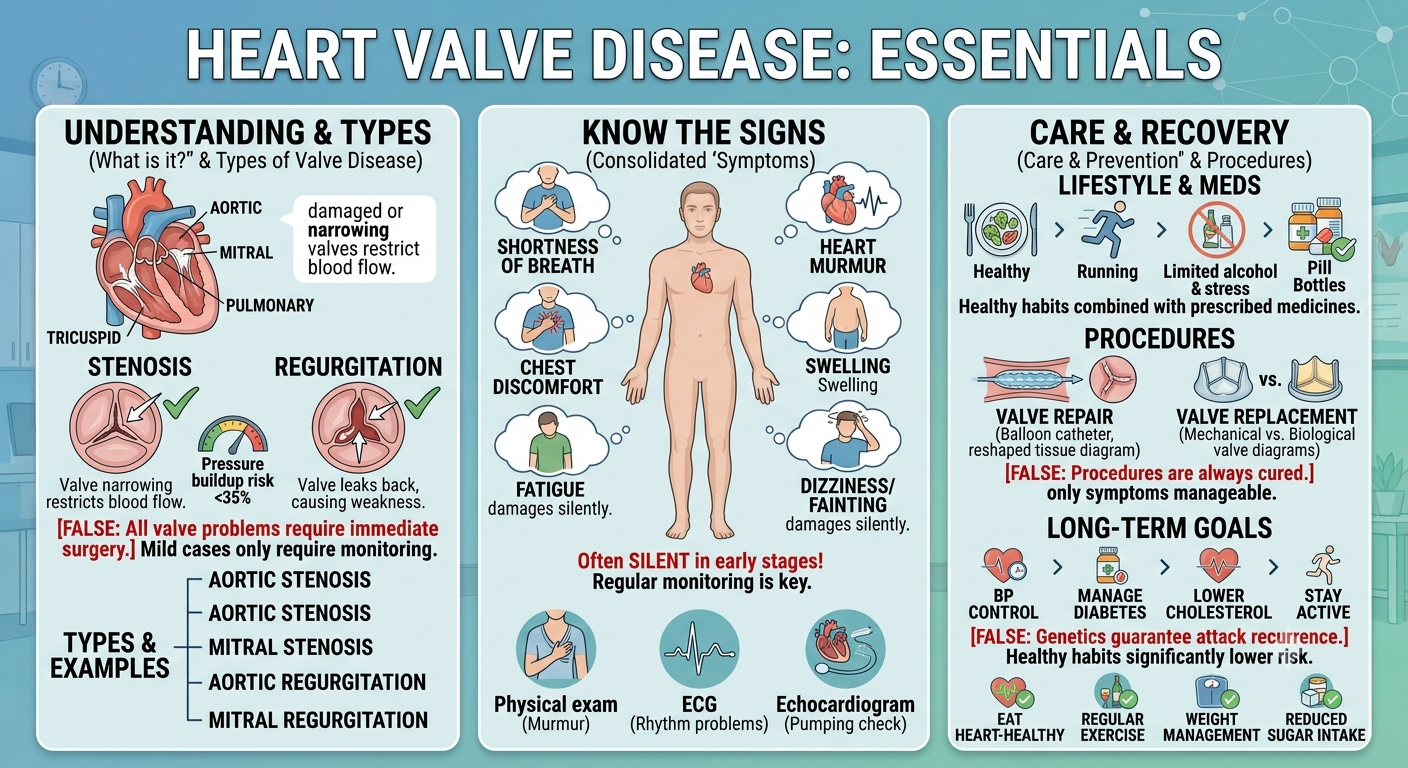
The heart has four main valves:
- Mitral valve – controls blood flow between the left atrium and left ventricle
- Aortic valve – controls blood flow from the heart to the body
- Tricuspid valve – controls blood flow between the right atrium and right ventricle
- Pulmonary valve – controls blood flow from the right ventricle to the lungs
Healthy valves open and close at the right time to maintain smooth blood flow. When a valve becomes damaged, blood flow may become restricted or may leak backward.
Types of Heart Valve Disease
Heart valve disorders are mainly classified into two types:
1. Valve Stenosis (Narrowing of the Valve)
Valve stenosis occurs when the valve opening becomes narrow and does not allow enough blood to pass through.
Because blood flow is restricted, the heart must pump harder, increasing pressure on the heart muscle.
Common examples include:
- Aortic stenosis
- Mitral stenosis
2. Valve Regurgitation (Valve Leakage)
Valve regurgitation occurs when a valve does not close completely, allowing blood to flow backward.
This causes the heart to pump extra blood to compensate, which may eventually weaken the heart muscle.
Common examples include:
- Mitral valve regurgitation
- Aortic valve regurgitation
3. Mixed Valve Disease
In some cases, a valve may have both narrowing and leakage problems at the same time.
Common Types of Heart Valve Disorders
Aortic Valve Disease
The aortic valve controls blood flow from the left ventricle to the body.
Problems include:
Aortic Stenosis
The valve becomes narrowed, reducing blood flow from the heart to the body.
Aortic Regurgitation
The valve leaks, causing blood to flow back into the heart.
Mitral Valve Disease
The mitral valve controls blood movement between the upper and lower chambers on the left side of the heart.
Common conditions include:
- Mitral valve prolapse
- Mitral stenosis
- Mitral regurgitation
Tricuspid Valve Disease
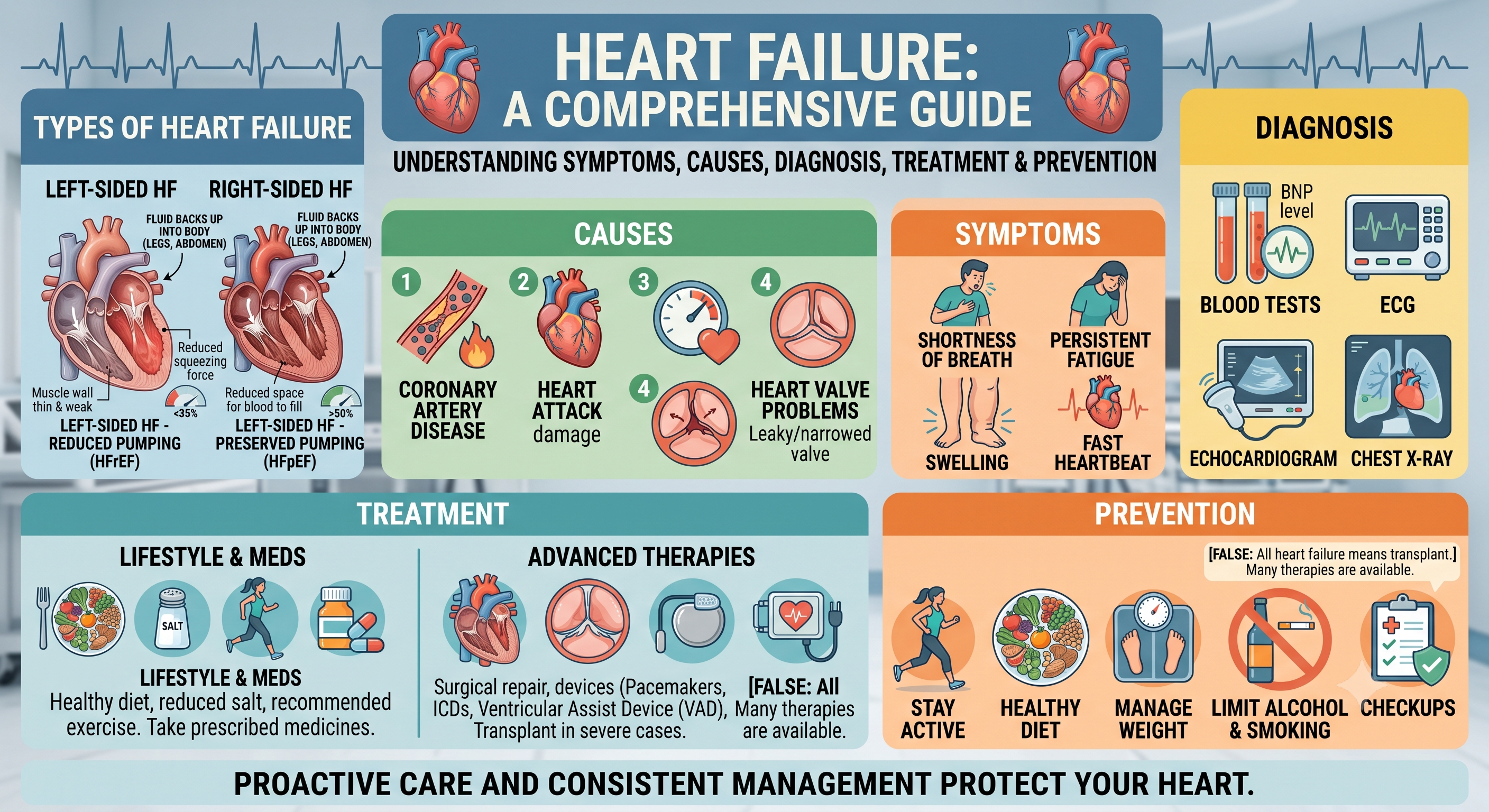
Problems with the tricuspid valve can affect blood flow on the right side of the heart and may lead to swelling and fluid buildup.
Pulmonary Valve Disease
Pulmonary valve problems are less common and may affect blood flow from the heart to the lungs.
Symptoms of Heart Valve Disease
Symptoms depend on the type and severity of valve damage. Some people may not have symptoms in the early stages.
Common symptoms include:
Shortness of Breath
Difficulty breathing may occur during exercise, daily activities, or while lying down.
Chest Pain or Discomfort
Reduced blood flow or increased pressure on the heart may cause chest discomfort.
Fatigue and Weakness
When the heart works harder to pump blood, the body may receive less oxygen, causing tiredness.
Heart Murmur
An abnormal sound heard during a heartbeat may indicate turbulent blood flow through a damaged valve.
Swelling in Legs and Ankles
Valve problems can reduce heart efficiency and cause fluid buildup in the body.
Dizziness or Fainting
Reduced blood supply to the brain may cause light-headedness or fainting episodes.
Irregular Heartbeat
Valve disease may increase the risk of abnormal heart rhythms such as atrial fibrillation.
Causes of Heart Valve Disease
Heart valve problems can develop due to several reasons.
Age-Related Valve Changes
Over time, calcium deposits may build up on valves, causing stiffness and narrowing.
This is one of the common causes of aortic valve disease in older adults.
Congenital Heart Valve Defects
Some people are born with abnormal valves, such as a bicuspid aortic valve, which may cause problems later in life.
Rheumatic Heart Disease
Rheumatic fever caused by certain bacterial infections can damage heart valves, especially the mitral valve.
Heart Infections (Endocarditis)
Infections affecting the inner lining of the heart can damage valves and interfere with their function.
Coronary Artery Disease
Reduced blood supply to the heart can affect heart muscle function and contribute to valve problems.
Cardiomyopathy
Diseases affecting the heart muscle can change the pressure inside the heart and affect valve function.
Connective Tissue Disorders
Certain inherited conditions affecting body tissues may weaken heart valves.
Risk Factors for Heart Valve Disease
Factors that may increase the risk include:
- Increasing age
- History of rheumatic fever
- Previous heart infections
- High blood pressure
- High cholesterol
- Diabetes
- Smoking
- Family history of valve problems
- Congenital heart conditions
Complications of Untreated Valve Disease
If valve disease is not managed, it may lead to:
- Heart failure
- Irregular heart rhythms
- Blood clots
- Stroke
- Enlargement of the heart
- Pulmonary hypertension
Early diagnosis and treatment can help prevent these complications.
Diagnosis of Heart Valve Disease
Doctors use several tests to evaluate heart valve function.
Physical Examination
The doctor may listen to the heart using a stethoscope to detect abnormal sounds called murmurs.
Echocardiogram
An echocardiogram uses ultrasound waves to create images of the heart.
It helps evaluate:
- Valve structure
- Valve movement
- Blood flow
- Heart pumping ability
Electrocardiogram (ECG)
An ECG records the electrical activity of the heart and helps detect rhythm problems.
Chest X-Ray
A chest X-ray may show:
- Enlarged heart size
- Fluid buildup in the lungs
Cardiac MRI or CT Scan
Advanced imaging may provide detailed information about heart structure and valve function.
Cardiac Catheterisation
This test measures pressure inside the heart and can assess blood flow through valves.
Treatment of Heart Valve Disease
Treatment depends on the type of valve problem, severity, symptoms, and overall health.
Regular Monitoring
Mild valve disease may only require:
- Regular check-ups
- Repeat echocardiograms
- Monitoring of symptoms
Medicines
Medicines cannot repair damaged valves but may help manage symptoms.
They may be used to:
- Control blood pressure
- Reduce fluid buildup
- Manage abnormal heart rhythms
- Prevent blood clots in selected patients
Valve Repair
Whenever possible, doctors may repair the existing valve rather than replace it.
Valve repair may include:
- Reshaping valve tissue
- Closing abnormal openings
- Supporting the valve structure
Valve Replacement Surgery
If a valve is severely damaged, replacement may be required.
Types of replacement valves include:
Mechanical Valves
These are durable artificial valves that may last many years but usually require lifelong blood-thinning medicines.
Biological Valves
These are made from animal or donated human tissue and may have a limited lifespan.
Minimally Invasive Valve Procedures
Some patients may benefit from catheter-based procedures, such as:
- Transcatheter aortic valve replacement (TAVR)
- Transcatheter valve repair procedures
These techniques may reduce recovery time in suitable patients.
Lifestyle Changes for Better Valve Health
Healthy habits can support overall heart function.
Recommended steps include:
- Eat a balanced heart-friendly diet
- Maintain healthy body weight
- Exercise according to medical advice
- Control blood pressure and cholesterol
- Manage diabetes
- Avoid smoking
- Limit alcohol
- Attend regular medical check-ups
Prevention of Heart Valve Disease
Not all valve diseases can be prevented, especially those caused by aging or inherited conditions.
However, risk can be reduced by:
- Treating throat infections promptly
- Preventing rheumatic fever when possible
- Maintaining good dental hygiene to reduce infection risk
- Managing cardiovascular risk factors
- Following a healthy lifestyle
When Should You See a Doctor?
Consult a healthcare professional if you experience:
- Increasing breathlessness
- Chest pain
- Fainting episodes
- Persistent fatigue
- Swelling in legs
- New irregular heartbeat
Seek emergency care for severe chest pain, sudden breathing difficulty, or loss of consciousness.
Frequently Asked Questions About Heart Valve Disease
Can heart valve disease be cured?
Some mild valve problems can be monitored, while severe valve disease may require repair or replacement. Treatment depends on the type and severity.
Is heart valve disease serious?
Yes. Severe untreated valve disease can affect heart function and may lead to heart failure or other complications.
Can heart valve disease occur at a young age?
Yes. Congenital valve defects, infections, and certain medical conditions can cause valve problems in younger individuals.
Can lifestyle changes repair damaged heart valves?
Lifestyle changes cannot repair a damaged valve, but they can support heart health and reduce strain on the heart.
How is heart valve disease detected?
Echocardiography is one of the most important tests used to diagnose and evaluate heart valve problems.
Conclusion
Heart valve disease can affect the heart’s ability to pump blood efficiently, but early diagnosis and appropriate treatment can significantly improve outcomes.
Regular heart evaluations, awareness of symptoms, and maintaining a healthy lifestyle are important for protecting heart function.
If valve disease is diagnosed early, many treatment options are available to help patients maintain an active and healthy life.