1. What Is Hypertension?
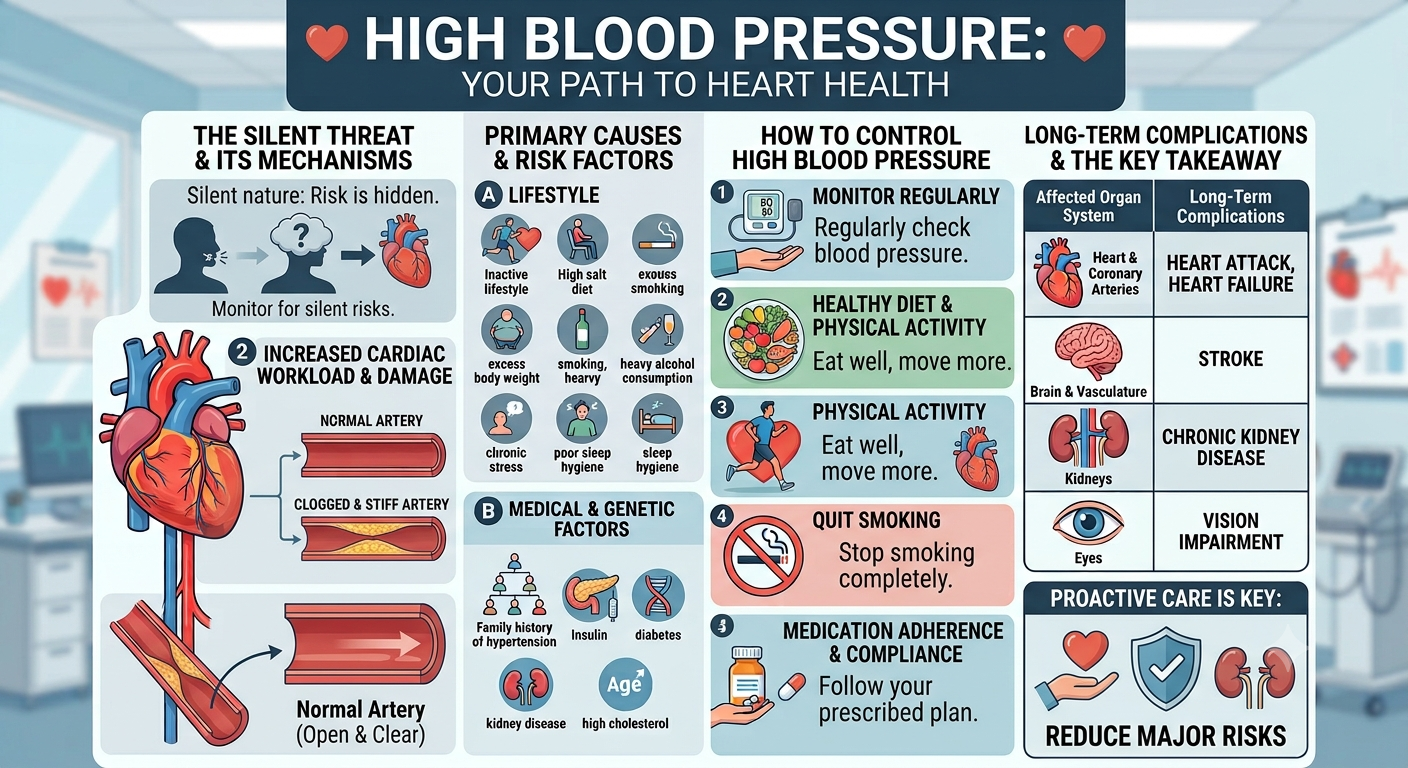
Hypertension, commonly known as high blood pressure, is a long-term medical condition in which the force of blood against the artery walls remains consistently higher than normal. Over time, this extra pressure can damage blood vessels and increase the risk of heart disease, stroke, kidney disease, and vision problems.
Blood pressure is measured in millimetres of mercury (mmHg) and is recorded as two numbers:
- Systolic pressure: Pressure when the heart pumps blood.
- Diastolic pressure: Pressure when the heart rests between beats.
A normal blood pressure is generally below 120/80 mmHg. Persistent readings of 140/90 mmHg or higher are commonly considered hypertension in many clinical settings, although treatment thresholds may vary depending on current medical guidelines and individual risk factors.
2. Types of Hypertension
2.1 Primary (Essential) Hypertension
This is the most common type of high blood pressure. It develops gradually over many years and usually has no single identifiable cause. Genetics, ageing, and lifestyle factors all contribute.
2.2 Secondary Hypertension
Secondary hypertension occurs because of another medical condition or certain medications. It often develops suddenly and may result from:
- Kidney disease
- Hormonal disorders
- Thyroid problems
- Obstructive sleep apnoea
- Certain prescription medicines
2.3 Resistant Hypertension
Blood pressure that remains above the target level despite the use of multiple blood pressure medications may be classified as resistant hypertension and requires specialist evaluation.
2.4 Pulmonary Hypertension
Pulmonary hypertension is a separate condition involving high blood pressure in the arteries of the lungs. It differs from systemic hypertension and requires specialised diagnosis and treatment.
3. Symptoms of Hypertension
High blood pressure is often called the "silent killer" because many people experience no symptoms, even when blood pressure reaches dangerously high levels.
Common Symptoms May Include:
- Persistent headaches
- Dizziness
- Blurred vision
- Chest pain
- Shortness of breath
- Nosebleeds
- Fatigue
- Heart palpitations
Important: Because symptoms may not appear until complications develop, regular blood pressure screening is essential.
4. Causes of Hypertension
Primary hypertension develops due to a combination of age-related changes, genetics, and lifestyle habits.
Secondary Hypertension May Result From:
- Kidney disease
- Hormonal disorders
- Thyroid disease
- Adrenal gland disorders
- Obstructive sleep apnoea
- Certain medications
- Pregnancy-related conditions
5. Risk Factors
Several factors increase the likelihood of developing hypertension.
Major Risk Factors:
- Increasing age
- Family history
- Obesity or overweight
- High salt intake
- Physical inactivity
- Smoking
- Excessive alcohol consumption
- Diabetes
- High cholesterol
- Chronic stress
- Poor sleep quality
Note: Having one or more risk factors does not guarantee hypertension, but it significantly increases the likelihood of developing the condition.
6. How Is Hypertension Diagnosed?
Diagnosis is based on repeated blood pressure measurements taken on different occasions.
Your Healthcare Provider May Recommend:
- Blood tests
- Urine tests
- Electrocardiogram (ECG)
- Echocardiogram
- Kidney function tests
- Home blood pressure monitoring
- Ambulatory blood pressure monitoring
These investigations help identify the underlying cause of hypertension and detect possible complications.
7. Complications of Uncontrolled Hypertension
Without proper treatment, hypertension can damage nearly every major organ.
Possible Complications Include:
- Heart attack
- Stroke
- Heart failure
- Chronic kidney disease
- Peripheral artery disease
- Vision loss
- Memory and cognitive decline
- Aortic aneurysm
Early diagnosis and effective treatment greatly reduce these risks.
8. Treatment for Hypertension
The primary goal of treatment is to:
- Lower blood pressure
- Reduce symptoms (if present)
- Prevent long-term complications
8.1 Lifestyle Changes
Lifestyle modification forms the foundation of hypertension management.
Recommendations:
- Eat a balanced diet rich in fruits, vegetables, whole grains, legumes, and lean protein.
- Reduce sodium intake.
- Exercise for at least 150 minutes per week.
- Maintain a healthy weight.
- Quit smoking.
- Limit alcohol consumption.
- Manage stress through relaxation techniques or mindfulness.
- Sleep 7–9 hours each night.
8.2 Medications
If lifestyle measures alone are insufficient, your healthcare provider may prescribe medications such as:
- Diuretics
- ACE inhibitors
- Angiotensin receptor blockers (ARBs)
- Calcium channel blockers
- Beta-blockers
- Other medicines based on individual health needs
Important: Never stop or change your medication without consulting your healthcare provider.
9. Diet for High Blood Pressure
A heart-healthy eating pattern can naturally help lower blood pressure.
Foods to Eat More Often:
- Fresh fruits
- Vegetables
- Whole grains
- Beans and lentils
- Fish
- Low-fat dairy products
- Unsalted nuts
- Healthy oils
Foods to Limit:
- Salt
- Processed foods
- Sugary beverages
- Fried foods
- Foods high in saturated and trans fats
The DASH (Dietary Approaches to Stop Hypertension) eating plan is widely recommended for people with high blood pressure.
10. Prevention
Many cases of hypertension can be prevented or delayed through healthy lifestyle choices.
Preventive Measures:
- Monitor blood pressure regularly.
- Stay physically active.
- Maintain a healthy weight.
- Eat a nutritious, low-sodium diet.
- Avoid tobacco products.
- Limit alcohol intake.
- Control diabetes and cholesterol.
- Reduce stress.
- Attend regular health check-ups.
11. When Should You See a Doctor?
Seek medical advice if:
- Blood pressure remains consistently elevated.
- You experience headaches, chest pain, or dizziness.
- You have diabetes, kidney disease, or heart disease.
- Home blood pressure readings are repeatedly above your target range.
Seek Emergency Medical Care Immediately If You Experience:
- Severe chest pain
- Sudden weakness
- Difficulty speaking
- Vision loss
- Confusion
- Severe shortness of breath
12. Frequently Asked Questions (FAQs)
12.1 Is Hypertension Curable?
Primary hypertension usually cannot be cured, but it can often be controlled effectively with healthy lifestyle changes and medication when necessary.
12.2 Can Stress Cause High Blood Pressure?
Yes. Stress can temporarily increase blood pressure and may contribute to long-term hypertension when combined with unhealthy lifestyle habits.
12.3 Can Exercise Lower Blood Pressure?
Yes. Regular physical activity improves heart health and can significantly reduce blood pressure over time.
12.4 What Foods Should People with Hypertension Avoid?
Limit foods high in:
- Salt
- Processed meats
- Fast food
- Sugary drinks
- Saturated and trans fats
12.5 How Often Should Blood Pressure Be Checked?
Adults should have their blood pressure checked regularly. People with hypertension or risk factors may require more frequent monitoring as advised by their healthcare provider.
13. Conclusion
Hypertension is one of the most common yet preventable health conditions worldwide. Because it often develops without noticeable symptoms, regular blood pressure monitoring is essential for early detection.
A combination of:
- Healthy eating
- Regular exercise
- Maintaining a healthy weight
- Avoiding tobacco
- Managing stress
- Taking prescribed medications
can effectively control blood pressure and reduce the risk of serious complications such as heart attack, stroke, kidney disease, and heart failure.
Key Takeaway:
Early diagnosis, consistent treatment, and long-term lifestyle changes are the keys to protecting your heart, preventing complications, and maintaining overall health.