1. Introduction
Dizziness is a common symptom that can make a person feel unsteady, lightheaded, or as if the surroundings are spinning. It can occur due to many different reasons, ranging from dehydration and stress to conditions affecting the heart, brain, inner ear, or blood circulation.
Although occasional dizziness may not be serious, recurrent, persistent, or sudden episodes can sometimes indicate an underlying medical condition that requires evaluation.
Understanding the causes, symptoms, diagnosis, treatment, and prevention of dizziness can help identify potential health concerns and ensure timely medical care.
2. What Is Dizziness?
Dizziness is a feeling of imbalance, lightheadedness, or altered movement perception. It is not a disease itself, but rather a symptom of various underlying conditions.
People May Describe Dizziness As:
- Feeling faint or about to pass out
- Feeling unsteady while walking
- A spinning sensation (vertigo)
- Loss of balance
- Feeling weak or confused
- A floating or disconnected sensation
The experience and severity of dizziness vary depending on its underlying cause.
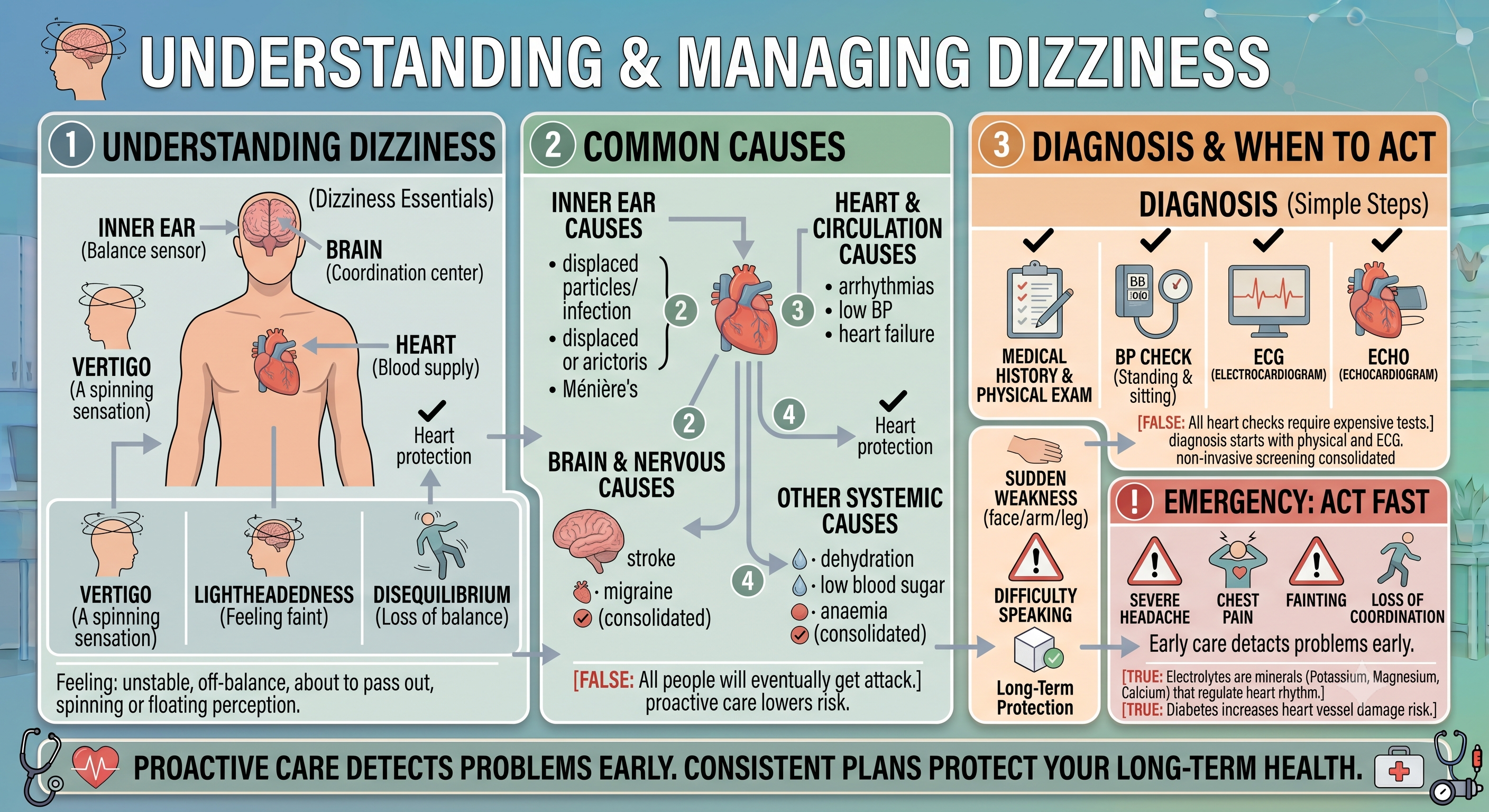
3. Types of Dizziness
3.1 Vertigo
Vertigo is the sensation that you or your surroundings are moving or spinning, even when you are standing or sitting still.
Common Causes Include:
- Inner ear disorders
- Vestibular (balance) disorders
- Certain neurological conditions
3.2 Lightheadedness
Lightheadedness is the feeling that you may faint or lose consciousness.
Common Causes Include:
- Low blood pressure
- Dehydration
- Low blood sugar
- Heart rhythm abnormalities
3.3 Disequilibrium
Disequilibrium refers to difficulty maintaining balance while standing or walking.
Possible Causes Include:
- Nerve disorders
- Muscle weakness
- Balance disorders
- Neurological conditions
4. Common Causes of Dizziness
Dizziness can occur due to conditions affecting the heart, brain, inner ear, blood circulation, metabolism, or nervous system.
5. Heart-Related Causes of Dizziness
5.1 Abnormal Heart Rhythms (Arrhythmias)
Irregular heartbeats may reduce blood flow to the brain.
Symptoms May Include:
- Dizziness
- Lightheadedness
- Fainting episodes
- Palpitations
5.2 Low Blood Pressure (Hypotension)
A sudden drop in blood pressure can reduce blood flow to the brain.
It May Occur Due To:
- Standing up quickly
- Certain medications
- Dehydration
5.3 Heart Failure
When the heart cannot pump blood efficiently, reduced circulation may cause:
- Dizziness
- Fatigue
- Shortness of breath
5.4 Heart Attack
Some people experience dizziness during a heart attack, especially when accompanied by:
- Chest pain
- Sweating
- Breathlessness
- Nausea
A heart attack is a medical emergency requiring immediate treatment.
6. Inner Ear Causes of Dizziness
The inner ear plays an important role in maintaining balance.
6.1 Benign Paroxysmal Positional Vertigo (BPPV)
BPPV occurs when tiny calcium crystals inside the inner ear become displaced.
Symptoms Include:
- Sudden spinning sensation
- Dizziness triggered by head movements
- Brief episodes of vertigo
6.2 Inner Ear Infection
Inflammation or infection affecting the balance organs may cause:
- Vertigo
- Hearing changes
- Nausea
6.3 Ménière’s Disease
Ménière’s disease affects fluid balance in the inner ear.
Symptoms Include:
- Recurrent episodes of dizziness
- Hearing loss
- Ringing in the ears (tinnitus)
7. Brain-Related Causes of Dizziness
7.1 Stroke
A stroke affecting the brain's balance centres can cause sudden dizziness.
Warning Signs Include:
- Facial weakness
- Difficulty speaking
- Weakness of the arm or leg
- Loss of coordination
Stroke requires immediate emergency medical care.
7.2 Migraine
Some people experience dizziness or vertigo during migraines, even without a severe headache.
8. Other Causes of Dizziness
8.1 Dehydration
Loss of body fluids due to:
- Excessive sweating
- Vomiting
- Diarrhoea
- Inadequate fluid intake
may lead to dizziness.
8.2 Low Blood Sugar (Hypoglycaemia)
Low blood glucose levels, particularly in people with diabetes, can cause dizziness and weakness.
8.3 Anaemia
Low haemoglobin levels reduce oxygen delivery to body tissues.
Symptoms Include:
- Weakness
- Fatigue
- Lightheadedness
8.4 Anxiety and Stress
Stress and anxiety may alter breathing patterns and nervous system responses, resulting in dizziness.
8.5 Medication Side Effects
Certain medicines may cause dizziness, including:
- Blood pressure medications
- Sedatives
- Some antidepressants
- Certain heart medicines
9. Symptoms Associated With Dizziness
Dizziness may occur along with other symptoms depending on the underlying condition.
Associated Symptoms Include:
- Nausea or vomiting
- Loss of balance
- Blurred vision
- Headache
- Ringing in the ears
- Weakness
- Chest discomfort
- Shortness of breath
- Fainting
The combination of symptoms helps healthcare professionals identify the underlying cause.
10. When Is Dizziness an Emergency?
Seek immediate medical attention if dizziness occurs with:
- Sudden weakness on one side of the body
- Difficulty speaking
- Severe headache
- Chest pain
- Fainting
- Severe breathlessness
- Irregular heartbeat
- Confusion
- Loss of coordination
These symptoms may indicate a stroke, heart attack, or another serious medical emergency.
11. Risk Factors for Dizziness
Factors that may increase the likelihood of dizziness include:
- Heart disease
- High blood pressure
- Diabetes
- Older age
- Dehydration
- Medication use
- Balance disorders
- Previous neurological conditions
- Anaemia
12. Diagnosis of Dizziness
Doctors evaluate dizziness by assessing its type, duration, triggers, and associated symptoms.
12.1 Medical History and Physical Examination
The healthcare provider may ask about:
- When the dizziness started
- Duration of episodes
- Activities that trigger symptoms
- Existing medical conditions
- Current medications
The examination may include checking:
- Blood pressure
- Heart rate
- Balance
- Eye movements
- Neurological function
12.2 Blood Pressure Measurement
Blood pressure testing helps detect:
- Low blood pressure
- Orthostatic (postural) hypotension
12.3 Electrocardiogram (ECG)
An ECG records the heart's electrical activity and detects:
- Heart rhythm abnormalities
- Signs of heart disease
12.4 Blood Tests
Blood tests may identify:
- Anaemia
- Blood sugar abnormalities
- Thyroid disorders
- Electrolyte imbalances
12.5 Echocardiogram
An echocardiogram evaluates:
- Heart structure
- Pumping function
- Heart valve abnormalities
12.6 Balance Tests
Specialised balance and vestibular tests help assess inner ear function.
12.7 Brain Imaging
CT scans or MRI scans may be recommended when neurological causes such as stroke or brain disorders are suspected.
13. Treatment of Dizziness
Treatment depends on the underlying cause.
13.1 Lifestyle Measures
Helpful self-care strategies include:
- Drinking adequate fluids
- Eating regular balanced meals
- Avoiding sudden changes in body position
- Getting sufficient sleep
- Managing stress
13.2 Treatment for Inner Ear Disorders
Treatment may include:
- Balance rehabilitation exercises
- Canal repositioning manoeuvres for BPPV
- Medicines to relieve vertigo symptoms
13.3 Treatment for Heart-Related Causes
Management may involve:
- Adjusting medications
- Treating abnormal heart rhythms
- Managing blood pressure
- Treating underlying heart disease
13.4 Treatment for Low Blood Sugar or Anaemia
Correcting nutritional deficiencies, treating anaemia, or restoring normal blood glucose levels can improve dizziness.
14. Prevention of Dizziness
Many episodes of dizziness can be prevented through healthy lifestyle habits.
Preventive Measures:
- Stay well hydrated.
- Eat a balanced diet.
- Exercise regularly.
- Monitor blood pressure.
- Manage diabetes effectively.
- Avoid excessive alcohol consumption.
- Review medications regularly with your doctor.
- Attend routine medical check-ups.
15. Frequently Asked Questions (FAQs)
15.1 Is Dizziness Always a Sign of a Serious Problem?
No. Dizziness may occur due to dehydration, stress, lack of sleep, or minor illnesses. However, frequent, persistent, or severe dizziness should always be evaluated by a healthcare professional.
15.2 Can Heart Problems Cause Dizziness?
Yes. Conditions such as heart rhythm disorders, low blood pressure, heart failure, and heart attacks can reduce blood flow to the brain, leading to dizziness.
15.3 What Should I Do If I Feel Dizzy?
If you feel dizzy:
- Sit or lie down immediately.
- Avoid sudden movements.
- Drink water if dehydration is possible.
- Seek medical advice if symptoms persist, worsen, or recur.
15.4 Can Low Blood Pressure Cause Dizziness?
Yes. Low blood pressure can reduce blood flow to the brain, causing lightheadedness, dizziness, or fainting.
15.5 When Should I See a Doctor for Dizziness?
Consult a healthcare professional if dizziness is:
- Frequent
- Unexplained
- Persistent
- Affecting daily activities
- Associated with chest pain, fainting, weakness, or breathing difficulty
16. Conclusion
Dizziness is a common symptom with many possible causes, ranging from temporary conditions such as dehydration to serious heart, brain, or inner ear disorders. Identifying the underlying cause is essential for effective treatment and preventing complications.
Maintaining a healthy lifestyle, staying hydrated, managing chronic medical conditions, and seeking prompt medical evaluation for persistent or warning symptoms can help improve overall health and quality of life.
Key Takeaway:
Never ignore sudden, severe, or recurrent dizziness, especially if it occurs with chest pain, fainting, weakness, or difficulty speaking. Early diagnosis and timely medical care can help identify serious conditions and improve long-term health outcomes.