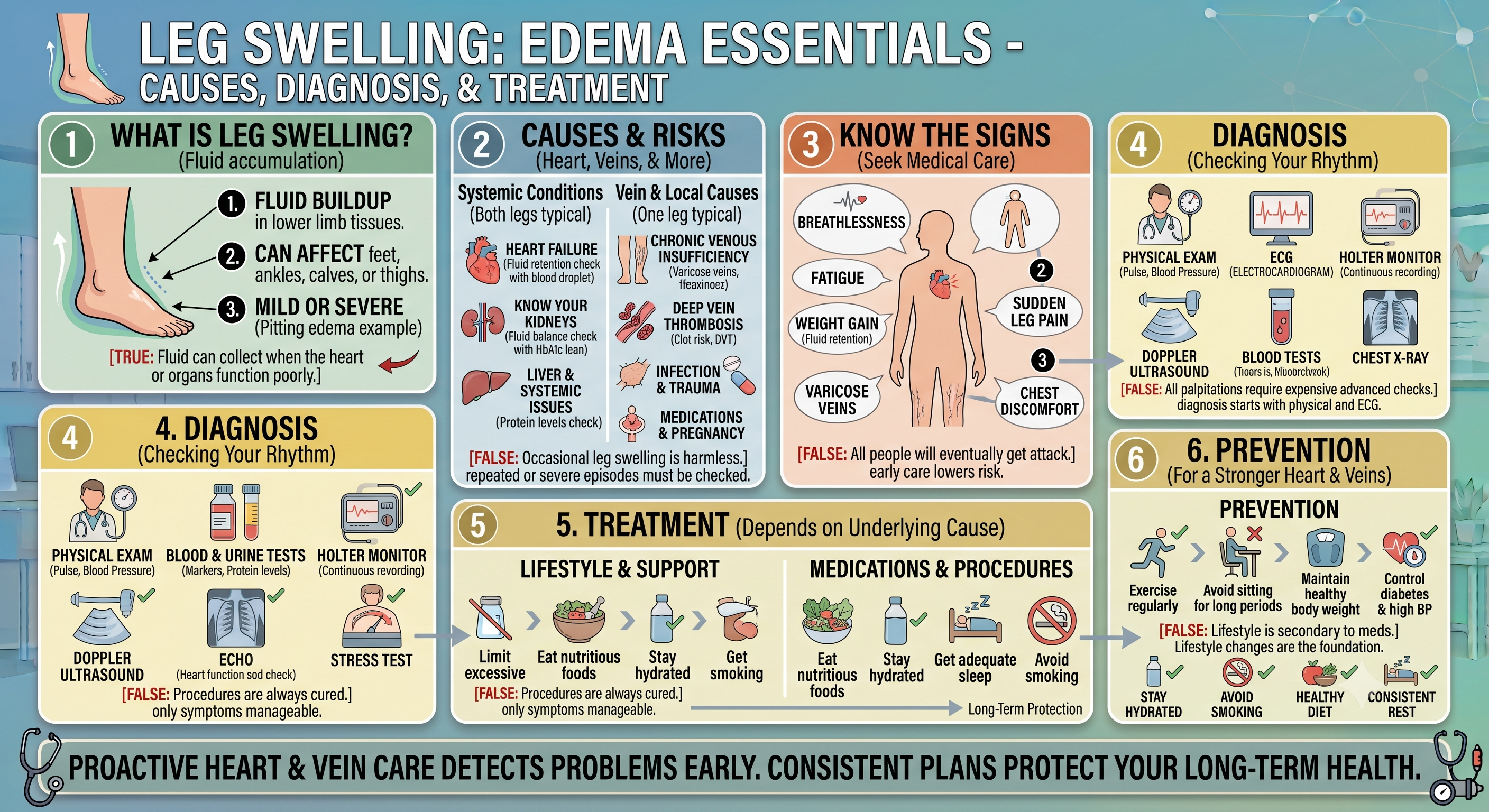
1. Introduction
Leg swelling is a common condition in which fluid builds up in the tissues of the legs, causing enlargement or puffiness. It may affect one leg or both legs and can occur due to several reasons, including prolonged standing, injury, circulation problems, heart conditions, kidney disease, or vein disorders.
While mild swelling may improve with rest and leg elevation, persistent or sudden leg swelling can sometimes indicate an underlying medical condition that requires prompt medical evaluation.
Understanding the causes, symptoms, diagnosis, treatment, and prevention of leg swelling can help identify the problem early and prevent complications.
2. What Is Leg Swelling?
Leg swelling, also known as leg oedema (edema), occurs when excess fluid accumulates in the tissues of the lower limbs.
It May Involve:
- Feet
- Ankles
- Calves
- Thighs
Swelling May Be:
- Mild and temporary
- Persistent and progressive
- Associated with pain, redness, or skin changes
The underlying cause determines the severity, duration, and treatment approach.
3. Common Causes of Leg Swelling
Leg swelling may result from conditions affecting the heart, blood vessels, kidneys, liver, lymphatic system, muscles, or soft tissues.
4. Heart-Related Causes of Leg Swelling
4.1 Heart Failure
Heart failure is one of the most common causes of swelling in both legs.
When the heart cannot pump blood effectively, blood flow slows and pressure increases in the veins. This allows fluid to collect in the legs and ankles.
Symptoms May Include:
- Swelling in both legs
- Shortness of breath
- Difficulty breathing while lying flat
- Fatigue
- Rapid weight gain due to fluid retention
4.2 Coronary Artery Disease (CAD)
Reduced blood supply to the heart can weaken heart function over time and contribute to fluid accumulation in the legs.
4.3 Heart Valve Disease
Damaged heart valves can interfere with normal blood circulation, increasing pressure in blood vessels and leading to leg swelling.
5. Vein-Related Causes of Leg Swelling
5.1 Chronic Venous Insufficiency
This condition occurs when the veins in the legs cannot efficiently return blood to the heart.
Common Symptoms Include:
- Swollen ankles
- Heaviness in the legs
- Varicose veins
- Skin discoloration
- Leg discomfort after prolonged standing
5.2 Deep Vein Thrombosis (DVT)
Deep Vein Thrombosis occurs when a blood clot forms in a deep vein, usually in one leg.
Symptoms May Include:
- Sudden swelling of one leg
- Pain or tenderness
- Warmth over the affected area
- Redness
DVT is a medical emergency because the clot can travel to the lungs and cause a pulmonary embolism.
6. Kidney-Related Causes of Leg Swelling
The kidneys help regulate fluid and salt balance in the body.
When kidney function declines, excess fluid and sodium may accumulate.
Symptoms May Include:
- Swelling of the legs and feet
- Changes in urination
- Fatigue
- High blood pressure
7. Liver-Related Causes of Leg Swelling
Liver disease may reduce protein production, allowing fluid to leak into body tissues.
Possible Symptoms Include:
- Leg swelling
- Abdominal swelling (ascites)
- Fatigue
- Yellowing of the skin or eyes (jaundice)
8. Other Causes of Leg Swelling
8.1 Injury or Trauma
Sprains, fractures, or muscle injuries can cause localized swelling.
8.2 Infection
Skin or soft tissue infections may cause:
- Swelling
- Redness
- Warmth
- Pain
- Fever
8.3 Medications
Some medicines may lead to fluid retention, including:
- Certain blood pressure medications
- Steroids
- Hormonal medicines
- Some diabetes medications
8.4 Pregnancy
Hormonal changes and increased pressure on blood vessels commonly cause swelling of the ankles and legs during pregnancy.
8.5 Prolonged Sitting or Standing
Long periods of inactivity may slow blood circulation and lead to temporary leg swelling.
9. Symptoms Associated With Leg Swelling
Depending on the underlying cause, leg swelling may occur with:
- Pain or tenderness
- Skin redness
- Warmth
- Tight or stretched skin
- Difficulty walking
- Shortness of breath
- Fatigue
- Weight gain due to fluid retention
10. When Is Leg Swelling an Emergency?
Seek immediate medical attention if leg swelling occurs with:
- Sudden swelling of one leg
- Severe leg pain
- Chest pain
- Difficulty breathing
- Coughing up blood
- Fainting
- Blue or pale skin
These symptoms may indicate a serious condition such as Deep Vein Thrombosis (DVT), pulmonary embolism, or heart failure.
11. Risk Factors for Leg Swelling
The likelihood of developing leg swelling increases with:
- Heart disease
- High blood pressure
- Diabetes
- Kidney disease
- Obesity
- Older age
- Sedentary lifestyle
- Smoking
- Previous blood clots
- Prolonged sitting or standing
12. Diagnosis of Leg Swelling
Doctors identify the cause through medical history, physical examination, and diagnostic tests.
12.1 Physical Examination
The healthcare provider may assess:
- Location and severity of swelling
- Skin changes
- Tenderness
- Signs of fluid retention
They may also check whether pressing the swollen area leaves a temporary indentation (pitting oedema).
12.2 Blood Tests
Blood tests may evaluate:
- Kidney function
- Liver function
- Heart-related markers
- Protein levels
- Signs of infection
12.3 Doppler Ultrasound
A Doppler ultrasound evaluates blood flow in the leg veins and helps detect:
- Blood clots
- Venous insufficiency
- Other vein disorders
12.4 Echocardiogram
An echocardiogram assesses:
- Heart pumping function
- Heart valves
- Heart structure
It is commonly recommended when heart failure is suspected.
12.5 Urine Tests
Urine tests help identify kidney diseases that may contribute to fluid retention.
12.6 Chest X-ray
A chest X-ray may detect:
- Fluid accumulation in the lungs
- Heart enlargement
- Other chest abnormalities
13. Treatment of Leg Swelling
Treatment depends on the underlying cause.
13.1 Lifestyle Measures
Helpful Steps Include:
1. Elevate the Legs
Keeping the legs above heart level can reduce fluid accumulation.
2. Stay Active
Walking and gentle leg exercises improve circulation and reduce swelling.
3. Reduce Salt Intake
Lower sodium intake helps minimise water retention.
4. Maintain a Healthy Weight
Weight management reduces pressure on veins and improves circulation.
5. Compression Therapy
Compression stockings may improve blood flow in certain vein-related conditions.
13.2 Medical Treatment
Treatment may include:
1. Medicines to Reduce Fluid Retention
Doctors may prescribe diuretics (water tablets) for conditions such as heart failure.
2. Blood Thinners
Anticoagulant medicines are commonly used to treat Deep Vein Thrombosis (DVT).
3. Treatment of Heart Conditions
Management may involve medications, lifestyle changes, or procedures to improve heart function.
4. Treatment of Vein Disorders
Some patients may require minimally invasive procedures or surgery to improve blood flow.
14. Prevention of Leg Swelling
Many causes of leg swelling can be reduced through healthy lifestyle habits.
Preventive Measures:
- Exercise regularly.
- Avoid prolonged sitting or standing.
- Maintain a healthy body weight.
- Control blood pressure and diabetes.
- Reduce excess salt intake.
- Avoid smoking.
- Stay well hydrated.
- Follow treatment plans for existing medical conditions.
15. Frequently Asked Questions (FAQs)
15.1 Can Heart Problems Cause Leg Swelling?
Yes. Heart failure commonly causes swelling in both legs because the heart is unable to circulate blood efficiently, leading to fluid buildup.
15.2 Is Swelling in One Leg More Concerning?
Yes. Sudden swelling in one leg, especially when accompanied by pain, redness, or warmth, may indicate a blood clot (DVT) or infection and requires urgent medical evaluation.
15.3 How Can I Reduce Mild Leg Swelling at Home?
Mild swelling may improve by:
- Elevating your legs
- Walking regularly
- Reducing salt intake
- Avoiding prolonged sitting or standing
15.4 Does Leg Swelling Always Mean Heart Failure?
No. Leg swelling may also result from vein disorders, kidney disease, liver disease, medications, injury, pregnancy, or prolonged standing.
15.5 When Should I Consult a Doctor for Leg Swelling?
Seek medical advice if swelling is:
- Persistent
- Worsening
- Painful
- Sudden and affecting one leg
- Associated with breathlessness or chest pain
16. Conclusion
Leg swelling is a common symptom that can result from simple lifestyle factors or underlying medical conditions involving the heart, veins, kidneys, liver, or lymphatic system. Identifying the underlying cause is essential for effective treatment and preventing complications.
Early medical evaluation is particularly important when swelling is persistent, sudden, or associated with chest pain, shortness of breath, or severe leg pain. Maintaining a healthy lifestyle, staying physically active, managing chronic health conditions, and attending regular medical check-ups can help improve circulation and reduce the risk of serious complications.
Key Takeaway:
Never ignore persistent or sudden leg swelling, especially if it affects one leg or occurs with breathing difficulty or chest pain. Early diagnosis and appropriate treatment can help prevent serious health problems and improve long-term vascular and heart health.